Get Full Government Meeting Transcripts, Videos, & Alerts Forever!
Get email alerts on the Mental Health topic
No spam. Unsubscribe anytime.
Region 4 South reports higher crisis‑team funding, ACT certification and steady AMHI support
Summary
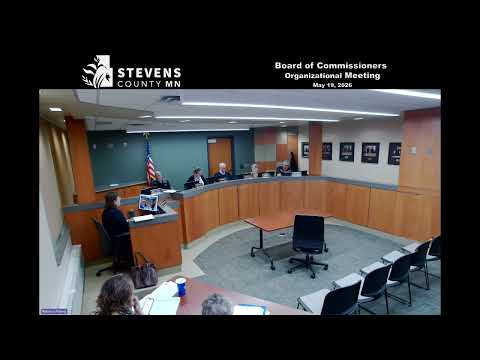
Kesha Anderson, administrator for the Region 4 South mental‑health consortium, told the Stevens County board the five‑county mobile crisis team serves about 30–45 new clients monthly, ACT has been revalidated after a fraud‑risk review, and AMHI funding remains on a two‑year formula cycle.
Kesha Anderson, administrator for the Region 4 South mental‑health consortium, gave the board an annual overview of the consortium's programs, saying the five‑county mobile crisis team is a 24/7 service that responds to emergency rooms, jails, schools and community locations and serves "about 30 to 45 new clients a month." Anderson said the program operates across adults and children and that staffing uses a mix of a regional program manager and employer‑of‑record contracts.
Anderson outlined the ACT (assertive community treatment) team model, describing a multidisciplinary staff that includes a contracted psychiatrist and peer specialists and noting the program is certified for up to 50 consumers. "ACT clients are ongoing," Anderson said, explaining the program provides intensive supports that can include daily contacts and medication observation.
She told the board that Minnesota identified the ACT program as "high risk" for fraud during a statewide review, which required extra documentation and an on‑site visit. Anderson said the region received a revalidation letter last week but warned the high‑risk designation means the state could withhold payments for up to three months if concerns arise.
On finances, Anderson said crisis funding has increased from roughly $816,000 in the prior grant cycle to more than $1,000,000 for the 2025–26 cycle, allowing modest increases in staff pay and outreach efforts. She said AMHI (Adult Mental Health Initiative) grants continue on a two‑year formula and that the application for the next two‑year allocation had just been released with vendor solicitations expected in the coming weeks.
Anderson also reviewed training and partnership work, noting the consortium has supported CIT (crisis intervention team) officer training, refresher courses and community skill workshops and that staff are monitoring ongoing operational pressures and underexpenditures tied to uncertain future rates.
The presentation concluded with a brief operational update: Region 4 South recently moved offices after a flood and completed repairs, and Anderson said staff would return vendor application information to the board once the AMHI solicitation timeline is finalized.