Get Full Government Meeting Transcripts, Videos, & Alerts Forever!
Get email alerts on the Cottage Grove Conservation District topic
No spam. Unsubscribe anytime.
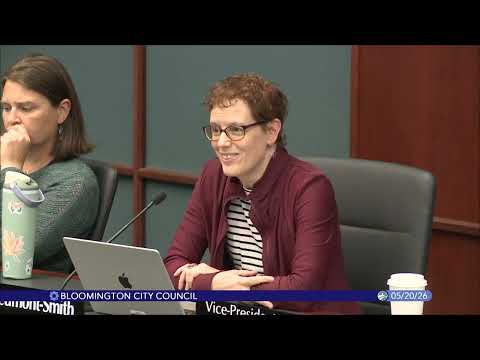
Council designates Cottage Grove Conservation District after lengthy public comment, 7–1
Summary
After extended public testimony both supporting and opposing protection, the Bloomington Common Council voted 7–1 to designate the Cottage Grove Conservation District, citing the neighborhood's architectural and historic integrity and threats from demolition and redevelopment.
The Common Council voted 7–1 to designate the Cottage Grove Conservation District, a conservation/historic area comprising approximately 122 properties in the cottage-grove area of Bloomington (Monroe County). The ordinance (20 26-07) adds the area to the city's list of designated conservation districts and recognizes the neighborhood's folk Victorian, Queen Anne and Craftsman-era buildings and limestone houses tied to Bloomington's historic industries.
Petitioners and neighbors described the district as a “naturally occurring affordable” and historically valuable neighborhood with mature trees, original limestone features and porches that encourage public life. Amy Butler (petitioner) told council that the petitioners had mailed notice and held multiple meetings to organize outreach. Historic Preservation Commission staff explained the typical process for guidelines development, emphasizing that neighborhoods commonly draft design guidelines that then go to the commission for review and formal action.
Opponents, including developers and property owners, warned that local designation increases regulatory costs and could constrain the ability to expand density near campus. Horn Properties and other commenters argued designation could limit code-compliant additions and affordable multi-unit conversions and potentially make housing outcomes less flexible. Several commenters and council members asked for a clearer process around guideline drafting and owner engagement; petitioners and supporters pledged to make guideline development inclusive.
Council debate recognized both concerns about cost and administration and the risk of demolition and speculative redevelopment. Supporters argued designation can preserve modest, well-built homes and embodied materials (limestone, hardwoods) that are otherwise likely to be lost to teardown and luxury redevelopment. The council voted 7–1 to approve Ordinance 20 26-07. Councilors who supported the measure highlighted outreach efforts by petitioners and historic preservation staff's recommendation; the dissenting vote reflected concerns over potential constraints on future development and affordability.
Next steps: neighborhood-led drafting of conservation guidelines, review by Historic Preservation Commission, and implementation of interim protections and guidance toward the authoritative design review process.