Get Full Government Meeting Transcripts, Videos, & Alerts Forever!
Get email alerts on the Board Actions Rulemaking topic
No spam. Unsubscribe anytime.
Georgia State Election Board agrees to extra public comment for SEB2023-025, sends several petitions to rulemaking
Summary
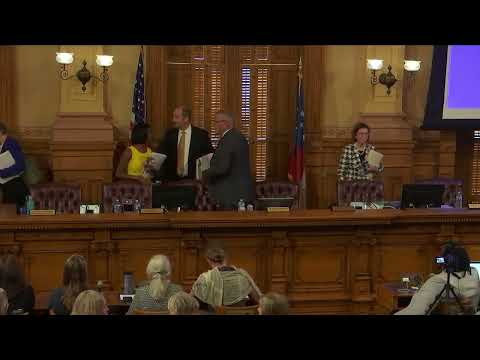
The State Election Board voted to adjourn to executive session on litigation matters, granted 15 minutes of public comment time to complainants in case SEB2023-025, and initiated rulemaking on multiple petitions after hours of public testimony and debate.
The Georgia State Election Board voted to retire briefly to executive session to consider pending legal matters arising from case SEB2023-025 and returned to approve additional public-comment time for the complainants. After debate about order and precedent, the board voted to allow two complainants or their representatives 15 minutes each during the public-comment period and to add further research and an August 6 agenda item to examine alleged deficiencies in the SEB2023-025 investigation.
Members said the decision balanced procedural constraints with the need for a fuller record. The chair called the roll on the intervening motion to go into executive session and the board recorded the voice vote as carrying by 3–2. Later motions to allow additional comment and to defer further research were approved; the board also opened an overflow room to accommodate dozens of speakers.
The meeting moved from procedural business into an extended public-comment period. Speakers ranged from civil‑rights and election‑integrity advocates pressing for clearer guidance on voter challenges and for rejecting proposals that would require extensive hand counting, to residents and activists urging a full independent investigation into allegations of missing ballot images and duplicated-counted ballots from prior elections.
On rulemaking, the board voted to initiate rulemaking procedures on multiple petitions while rejecting or tabling others after discussion about statutory authority, cost and feasibility. Specifically, petition language presented by a board member concerning pre‑certification reconciliation of ballots and voters was approved to begin the rulemaking process (motion carried 3–1). The board also voted to initiate rulemaking on a petition by Charlene Alexander requiring precinct-level hand-counts of ballot totals (motion carried 3–1). A separate petition proposing tracked/restricted commercial delivery for mailed ballots was discussed and denied as presented; the board suggested resubmission after revision. Another petition to regulate voter-challenge procedures was tabled for further consideration to allow staff and board members time to analyze legislative changes and operational impacts.
The board scheduled further hearings and asked petitioners and stakeholders to submit written comments. The meeting included technical testimony and lengthy public comment; the board recessed for lunch and set additional petition hearings for the next day.
Actions and outcomes announced at the meeting were reflected in formal motions and voice votes taken on the record.