Get Full Government Meeting Transcripts, Videos, & Alerts Forever!
Get email alerts on the Curriculum And Assessment topic
No spam. Unsubscribe anytime.
Board discusses textbooks, Destiny tracking and district "redo" grading procedure
Summary
Staff described textbook options (online, print, or bundles), Destiny-based inventory tracking and a district "redo" procedure that replaced a previous grading-floor policy; the board asked about district-level internet agreement administration.
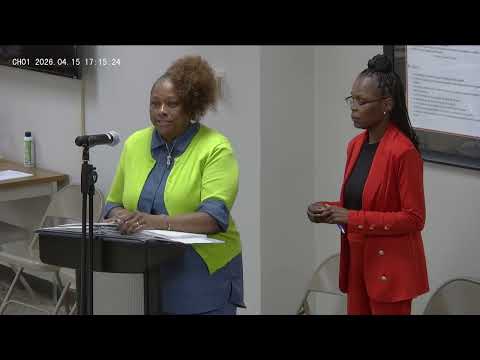
A board member opened the meeting by asking whether textbooks remain central to instruction or whether technology has replaced many textbook functions.
A district staff member answered the question, describing three ways to receive textbooks: "You can either get them, through technology online or you can get just the books, or you can get what is called a bundle." The staff member said, "I order the bundle because with technology, sometimes it can fail," explaining the bundle provides both online access and a physical copy to prevent interruptions to teaching.
The staff member described the textbook-selection process: school teams attend "caravans," select textbooks and then a survey of affected teachers determines the majority choice. For inventory control and returns, the staff member said schools use the Destiny system: assistant principals or textbook coordinators "go back through and click on the SKU code and load them back up into Destiny," which lets the state textbook depository know books remain within schools.
On disposition, the staff member said when materials are out of use after about five to six years some schools allow parents to take older editions home during parent engagement nights; the staff member said the state department may accept a limited number back but schools handle the remainder locally.
The board also discussed grading policy. The staff member said the district enacted a grading floor about 10 years ago "that says that a child cannot make lower than a grade of 50," but later a superintendent, Mick Zayas, "stated that grading floors, were against the law." The district instead uses a "redo procedure," which the staff member described as allowing a student to redo an assignment using a form that must be signed by a parent; the staff member said they have "afforded the teachers the opportunity, but the minimum is 2" redo attempts, and teachers may allow more at their discretion.
A board member asked whether the Internet/network access agreement is done at the district or school level; Miss Keller explained it is done at the district level, approved at the state level and pushed down to schools.
The discussion mixed procedural questions about packet contents with instructional policy details; no formal vote was taken on textbooks or grading procedure during the meeting.
Provenance: topicintro SEG 001; topfinish SEG 266