Get Full Government Meeting Transcripts, Videos, & Alerts Forever!
Get email alerts on the Land Use Development topic
No spam. Unsubscribe anytime.
Corte Madera council approves 150‑unit assisted‑living and memory care project at 56 Madera Boulevard
Summary
The Corte Madera Town Council unanimously adopted Resolution No. 30/2026 to approve a 150‑unit residential care facility (118 assisted living, 32 memory care) at 56 Madera Boulevard, finding the project exempt from further CEQA review under Guidelines §15183 and approving associated waivers and a $1.9 million commercial linkage in‑lieu fee. Council and public raised concerns about tree removals, pond access and pedestrian safety.
The Corte Madera Town Council voted unanimously on July 7 to adopt Resolution No. 30/2026, approving a 150‑unit residential care facility at 56 Madera Boulevard and finding the project exempt from further environmental review under CEQA Guidelines §15183. The approval includes a conditional use permit, preliminary and precise plans, design review and several development‑standard waivers requested under state density bonus law.
Staff and the applicant described the project as 118 assisted‑living units and 32 memory‑care units, a building of about 176,500 square feet with two‑ and three‑story portions. Amy Lyle of the planning division told the council the project qualifies under SB 330 and the state density bonus statute, which limits local discretion and locks in processing timelines and fees. "This project, if entitled and built, would produce 42% of our above‑moderate income units" under the town's housing element, staff said, noting memory care units are not counted as typical housing under state law because they lack kitchens.
Carissa Savant, vice president of development for ONI Development (Oakmont affiliate), presented the applicant's refinements and operations plan and emphasized resident safety and programming. "Our average age of our residents is approximately 85 years old," Savant said, explaining the pool is designed for therapeutic uses and that artificial turf in interior courtyards reduces trip hazards for mobility‑impaired residents.
Key project terms and mitigation measures described to the council included: a proposed in‑lieu commercial linkage fee of roughly $1.9 million (the consultant's maximum justifiable fee was substantially higher, but staff recommended a project‑specific fee based on the nexus study); provision of 98 on‑site parking spaces (including 8 EV and 4 accessible stalls); undergrounding of four overhead utilities along the Madera frontage; and a landscape plan proposing 350 new trees to replace and augment removed vegetation.
Staff reported an arborist inventory identifying 218 trees on site and recommended removal of 108 trees (including 20 permit‑sized trees) because grading and required fill would compromise root systems. The town's peer‑review arborist agreed with the applicant's assessment, and staff included conditions requiring replacement plantings and consideration of Marin Audubon Society recommendations.
During public comment, Age Friendly Corte Madera and other residents urged robust amenity space, accessible paths, and backup power for medical equipment. Ruben Galvan, a field representative for the North Coast State Carpenters Union, asked whether the project would include "strong labor standards" (fair wages, benefits and apprenticeship opportunities). Applicant representatives said the project uses an open bidding process and that they evaluate insurance and contractor qualifications; they also said they are willing to meet with unions to discuss standards.
Council members pressed staff and the applicant on several points: whether the town can require public access to the pond via prescriptive easement (town counsel and the applicant's counsel said prescriptive rights are fact‑intensive and the council does not have authority to impose such an easement through the entitlement process); noise mitigation from Highway 101 (the applicant proposed a concrete masonry unit wall and acoustically rated windows to reduce impacts); potential flooding and stormwater effects from grading and the wall (the project must undergo hydraulic and drainage analysis during permitting); and pedestrian safety at the Madera/Tamal Vista intersection (staff agreed to review possible improvements).
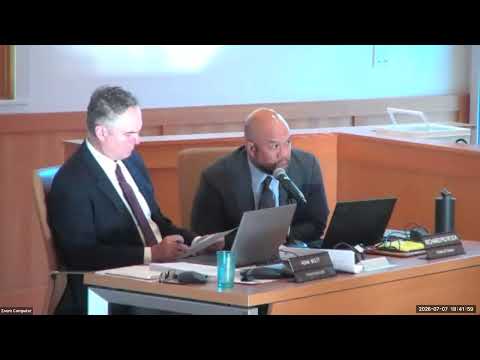
After deliberation, Mayor Thomas announced the motion to adopt Resolution No. 30/2026; the council recorded four affirmative votes (Council member Andrews, Council member Abazio, Vice Mayor Cuciza and Mayor Thomas) and the motion carried.
Next steps: with the town council action the project proceeds to required permitting and any remaining ministerial approvals such as grading permits; conditions of approval call for further coordination with resource agencies on pond and habitat issues and implementation of required mitigation measures.