Get Full Government Meeting Transcripts, Videos, & Alerts Forever!
Get email alerts on the Sustainable Development Goals topic
No spam. Unsubscribe anytime.
UN launches SDG Report 2026, warns progress is uneven and financing gap threatens gains
Summary
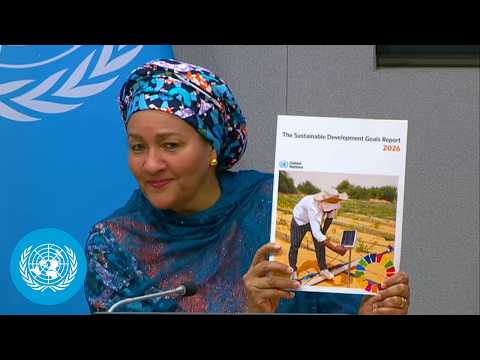
At a press briefing launching the Sustainable Development Goals Report 2026, Deputy Secretary‑General Mina Mohammed said the SDGs are delivering results but unevenly and at risk of reversal, and urged urgent reforms to international finance to close a $4 trillion annual shortfall.
The United Nations launched its Sustainable Development Goals Report 2026 at a press briefing, where Deputy Secretary‑General Mina Mohammed said the global agenda remains achievable but progress is uneven and fragile. Speaking to reporters, Mohammed highlighted concrete gains—falling unemployment (to 4.9% in 2025), nearly 1 billion more people with access to drinking water, and nine in 10 people with electricity—while warning that ‘‘they are delivering for people, just not fast enough’’ and that a growing financing shortfall threatens further progress.
The report, presented alongside remarks from Under‑Secretary‑General Lee Junhwan and Shantanu Mukherjee of the UN statistics division, paints a mixed picture. Lee said the picture shows ‘‘real progress’’ in areas and countries but stressed the need for political determination, scaled financing and the adoption of frontier technologies to accelerate implementation. Mukherjee summarized statistical findings, noting the High‑Level Political Forum will review SDGs 6, 7, 9, 11 and 17 this year and citing rural gains in water and sanitation and a persistent digital divide.
Why it matters: UN officials said gains are being undermined by conflict, climate shocks and strained finances. The report flags a roughly $4,000,000,000,000 annual SDG financing gap, declining official development assistance and rising military spending—factors the DSG said risk reversing decades of progress unless international finance and debt frameworks are reformed and long‑term resources made more accessible to vulnerable countries.
Mohammed also urged that gender equality be treated as an enabler across sectors rather than a siloed responsibility. ‘‘Advancing gender equality is an enabler of every goal,’’ she said, arguing that investments in agriculture, health and education must be planned to benefit women and girls rather than relegated to a single ministry.
Report highlights and numbers cited by UN officials included: unemployment down to 4.9% in 2025; almost 1 billion more people with drinking water in the last decade; 9 in 10 people with electricity; an estimated 273,000,000 children still out of school; official development assistance down 23% (as noted by journalists quoting the report); a reported $4 trillion annual SDG financing gap; and external debt reaching about $8.9 trillion for low‑ and middle‑income countries, with remittances of roughly $687 billion in 2024, according to the statistics division.
Journalists pressed the UN on practical obstacles. When asked why resource‑rich countries such as Iraq still face chronic blackouts, Mohammed said the global statistics ‘‘mask’’ national realities: damaged infrastructure after conflict, institutional and governance shortfalls, and the need for long‑term planning and capacity building. On data, Mukherjee said disaggregation remains a major challenge—national aggregates can mask subnational gaps and rapid changes may outpace slower official statistics processes.
On a personal question from a reporter about the leadership of the UN, Mohammed responded directly: ‘‘I’m not a candidate for the secretary general of the United Nations.’’ She emphasized instead the need for rotation and said she hopes Latin America and the Caribbean will present a woman candidate.
Next steps: UN officials pointed to a 2027 summit and annual review processes such as the HLPF and national voluntary reviews as opportunities to accelerate action and address the means of implementation. The briefing closed with UN staff urging journalists to use the report as a tool to communicate the SDGs’ tangible impacts and remaining gaps.
The report and related materials were presented at the briefing and are available from the United Nations.