Get Full Government Meeting Transcripts, Videos, & Alerts Forever!
Get email alerts on the Housing topic
No spam. Unsubscribe anytime.
Council orders audit request and property inspection after concerns about an affordable‑housing developer’s payments and expenses
Summary
After finance staff presented payment history and audited statements for a city promissory note tied to a local affordable‑housing project, council directed the city attorney and finance staff to demand six years of records, pursue an audit if needed, and inspect the property amid concerns about rising operating expenses, subordination to a Citibank loan, and nonrecourse terms.
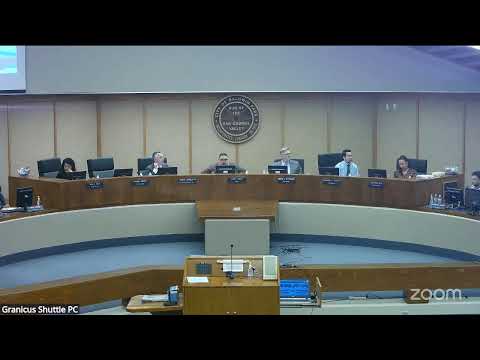
The Baldwin Park City Council on June 3 directed staff and legal counsel to press an affordable‑housing developer (referred to in staff materials as "Rome/Room") for financial documents, to seek an audit of at least the last six years of accounting records, and to inspect the property after council members raised significant concerns about payment patterns and rising operating expenses.
Finance staff told the council that the city holds a long‑term promissory note tied to residual receipts from the property and has applied receipts to Loan A per the agreement. Staff reported outstanding principal and accrued interest totaling roughly $7.87 million on the city’s records and said the city had relied on audited financial statements the developer provided for payment calculations.
Council members questioned why operating expenses reported by the owner jumped substantially beginning in 2022, reducing residual receipts to the city. They also asked why the city’s note was subordinated to a Citibank loan and why the note contained nonrecourse terms that limit the city’s ability to collect. Multiple council members said the developer had been slow to respond to information requests and that the city lacked supporting receipts for some expense increases; they directed the city attorney to issue a firm written demand for records and to examine legal options including an independent audit and property inspection. Staff and the city attorney said they would evaluate whether the affordability covenant is protected and whether a default exists.
What comes next: city staff and counsel will draft a demand letter requesting audited financials and underlying receipts for a minimum of six years, schedule an inspection of the property, and evaluate legal remedies if the documentation does not support the owner’s expense claims.