Get Full Government Meeting Transcripts, Videos, & Alerts Forever!
Get email alerts on the Data Centers topic
No spam. Unsubscribe anytime.
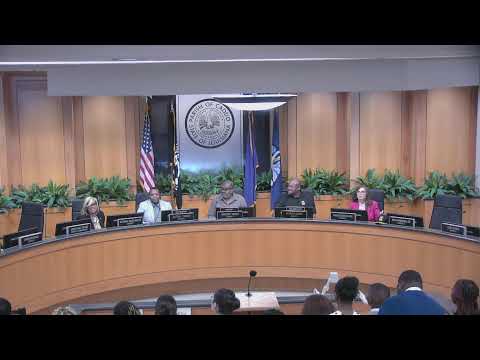
Caddo Parish commissioners remand data‑center impact resolutions after residents demand independent studies
Summary
After several residents raised water‑use, health and secrecy concerns about proposed data centers, the Caddo Parish Commission voted to send two resolutions requesting environmental studies to the Natural Resources Committee for further review; the remand passed 10‑1‑1.
Residents and commissioners on the Caddo Parish Commission on Thursday shifted debate over proposed large data‑center projects toward further study, voting to refer two resolutions that ask operators to assess environmental and water impacts to the commission’s Natural Resources Committee.
The action followed a packed public‑comment period in which local residents urged caution. "I do not support them, and I don't want them in our city," said Elaine Hamilton, a life‑long Shreveport resident who warned that a proposed $12.5 billion data‑center would “consume water from our city” and harm drinking‑water access. Other residents raised similar worries about large daily water withdrawals, higher utility bills and potential health impacts.
Commissioners debated competing approaches on whether to ask the companies to perform environmental reviews themselves or require independent third‑party studies. Matthew Alexander, a resident and petition organizer, urged a third‑party impact review and cited the Caddo Lake Commission bylaws, arguing the commission must protect domestic users’ priority for lake water. Several speakers also criticized nondisclosure agreements signed during earlier negotiations and asked for transparency.
After discussion and a substitute motion, the commission voted to remand both resolutions (resolution 38 — urging rainwater harvesting and filtration practices — and resolution 41 — asking for environmental impact studies that include multiple proposed sites) to the Natural Resources Committee for a formal review and report back to the full body. The remand motion carried with 10 in support, 1 in opposition and 1 absent.
Commissioners who supported referral said the committee process will allow experts and stakeholders to provide factual analysis before the commission takes regulatory or legislative action. Commissioners who opposed immediate referral urged the commission to avoid appearing to shut down business opportunities, but also signaled willingness to weigh stricter conditions if factual evidence supported them.
The commission did not adopt any moratorium or regulatory change at the meeting; instead it directed staff and the committee to gather relevant studies, consult the Caddo Lake authority and other technical experts, and return recommendations to the full commission.