Get Full Government Meeting Transcripts, Videos, & Alerts Forever!
Get email alerts on the School Funding topic
No spam. Unsubscribe anytime.
Madison County supervisors adopt resolution to seek 1% sales tax referendum for school construction
Summary
The Madison County Board of Supervisors voted unanimously to adopt Resolution 2026-16, authorizing staff to file a petition to place a 1% local sales-and-use tax on the ballot to fund construction and renovation of public schools; staff and counsel will file the petition with the circuit court within statutory deadlines.
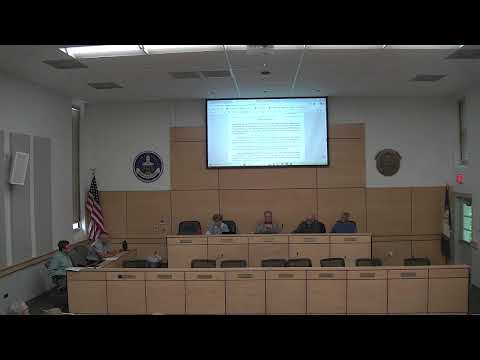
The Madison County Board of Supervisors voted unanimously July 7 to adopt Resolution 2026-16, initiating a voter referendum to authorize an additional local retail sales-and-use tax of up to 1% dedicated solely to capital projects for construction and renovation of public schools.
The measure, which the board approved after a staff presentation and public comment, directs county staff and counsel to file a petition and court order with the circuit court clerk so a judge can review the petition before the election. Weakley, speaking for staff, said the county has updated the packet documents to reflect an 81-day filing deadline and to clarify that the tax would apply to public schools; the resolution also contains a sunset tied to bond repayment or to 07/06/2046 for projects not financed by bonds.
Why it matters: the tax, if approved by voters, is intended to create a dedicated revenue stream for school capital projects rather than relying solely on property taxes. Supervisor Jewett said the authorization expands local taxing options under recent state law and urged an objective analysis to give voters clear information about fiscal impacts before they vote.
Public comment and key claims Jim Smith, a resident of Brightwood, urged the board to put the question on the ballot and argued property taxes produce unequal burdens tied to housing values. "This 1% sales tax for school construction will start the process of revamping the tax base," Smith said, and asked that the county define key terms (for example, what counts as "renovation" or a "school") in advance.
Staff and legal explanation Weakley walked the board through three documents in the meeting packet: the resolution that authorizes the board to seek a referendum, the draft petition, and the proposed court order. Weakley said the packet language was amended to add the word "public" in front of "schools" so the tax explicitly targets public-school capital projects and noted the resolution limits the levy to a maximum of 1% and includes the sunset provision tied to loan or bond repayment.
County counsel Wright, participating online, described the filing process: "If you all decide to pass the resolution, then I would take the resolution along with [the] draft petition and we will file it with our court. The judge would review the petition. I don't know if there's gonna be a need for a hearing." He also noted statutory deadlines that govern when petitions must be filed relative to an election.
Fiscal estimates and next steps Supervisor Jewett outlined preliminary revenue figures and analytic steps the county will pursue: he said existing local sales-tax returns to the locality run "in the neighborhood of about 1.7 to $1,800,000 a year" (a figure that, per his remarks, included groceries in earlier state distributions). He estimated that excluding groceries could reduce that base and that the county might expect roughly "$1.2, $1.3 million" annually from an additional local 1%, with nonresident shoppers accounting for an estimated 20%–25% of that revenue. Jewett urged the board to complete a comprehensive, objective analysis with the commissioner of revenue and school officials so voters understand expected revenue, project needs and how the funds would be used.
Motion, vote and outcome Supervisor Jewett moved to adopt Resolution 2026-16; the motion was seconded and the board voted (Supervisor Snyder — aye; Supervisor Jewett — aye; Miss Sharman — aye; Chair — aye). The chair announced the motion carried and the board adopted the resolution, directing staff and counsel to proceed with the petition filing and the court process.
What happens next Weakley and Wright said staff will work with the circuit court clerk to file the petition and that the judge will review the request; the revised packet reflects an 81-day statutory filing window ahead of the November 3 election and an early-voting start date noted in discussion of September 18. If voters approve the measure, collection and disbursement timing will depend on final financing choices (bonded projects would be subject to repayment timelines; non-bonded projects would still be capped by the 07/06/2046 sunset language included in the resolution).
The board had no closed session business and adjourned following the vote.