Get Full Government Meeting Transcripts, Videos, & Alerts Forever!
Get email alerts on the Equitable Budgeting topic
No spam. Unsubscribe anytime.
Equity subcommittee urges council to codify an 'equitable budgeting' framework, citing ARPA lessons and pilot options
Summary
The equity subcommittee proposed an ordinance to institutionalize equitable budgeting: departments would set measurable disparity‑reduction goals, department heads would undergo equity training, and the Office of Civil Rights, Equity and Inclusion would compile annual progress reports; council members raised questions about capacity, funding, and implementation timelines.
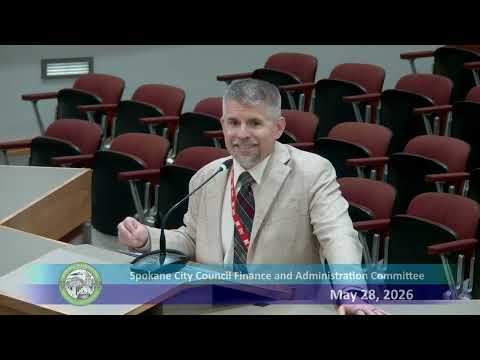
Sebastian Dries, introduced by Alex Gebelisco, presented the equity subcommittee's proposal to codify an equitable‑budgeting framework that the subcommittee says grew from ARPA work and statewide guidance.
"We would like to ask this council to codify the budget equity process within the city of Spokane," Sebastian said, summarizing a framework that would require departments to analyze data, define measurable goals to reduce disparities and improve data quality, and have the Office of Civil Rights, Equity and Inclusion review and compile department reports into an annual progress report.
Sebastian argued the framework is intended to be a process language — a short ordinance sentence could institutionalize review and accountability — and cited a Chicago example where a procedural change (servicing a whole area instead of single callers for tree trimming) delivered broader, more equitable service while saving money.
Council members broadly welcomed the goals but raised practical concerns about implementation. One member noted that language‑access requirements and similar items have been slow to move through departments; another said the city lacks personnel and funds to absorb new mandates and asked how philanthropic partners would be engaged without creating dependencies. Sebastian and Alex said philanthropy has expressed interest in supporting pilots and data infrastructure but that funders want evidence of city commitment.
Several council members suggested a phased approach: start with one existing program or pilot (for example, pothole quadrant approaches) and expand if successful. The Council President emphasized that placing the subcommittee's role in ordinance was intended to protect the work from changing administrations but acknowledged the council cannot execute administrative tasks and that implementation will require administration buy‑in.
The committee requested further details on pilot options, resource needs, and how the proposed ordinance language would be drafted; no formal action was taken at the meeting.