Get Full Government Meeting Transcripts, Videos, & Alerts Forever!
Get email alerts on the School Budget topic
No spam. Unsubscribe anytime.
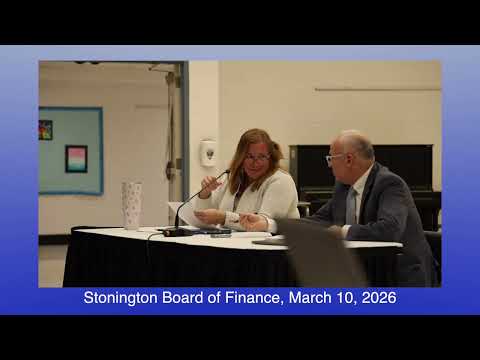
Stonington Board of Finance sets preliminary school budget at $47,957,147 after insurance correction
Summary
After a lengthy debate over health‑insurance rebates and staffing requests for special services, the Stonington Board of Finance set the Board of Education bottom‑line at $47,957,147 and recorded a split vote; members also asked staff to analyze reserve and insurance options before final deliberations.
The Stonington Board of Finance on Wednesday set a preliminary Board of Education bottom‑line of $47,957,147 after members discussed a newly found insurance rebate and a slate of staffing requests for special services.
The board moved the figure and approved it on a recorded vote: in favor were Mike, Sarah, Alsar, Phil Stenberg and Daniel Cheeseburger; opposed were Chris Johnson, David Brown and Jean Winchester.
Alicia, the school finance presenter, told the board she had found an insurance accounting error that reduces the board of education’s insurance line by $63,465 and that the broker’s newest cost projections and a town‑board reconciliation produced the corrected total. “After last week’s meeting, I found an error in the Board of Ed insurance request… It reduces the insurance budget by $63,465,” Alicia said while reviewing the memo the board had requested.
Administrators described why the revised number still requires added staffing. The maintain‑current‑services request, they said, includes positions they consider mandatory to meet legal and programmatic obligations — chiefly special‑education support (BCBA and RBT positions), a speech teacher FTE, pre‑K teacher and para positions and interventionists at West Pine. The presenters said some roles formerly contracted out would be hired in‑house, which should offset some contracted‑services costs but not fully negate the net increase.
“I don’t anticipate the Board of Ed would not want me to correct the error,” Alicia told the board, describing a reconciliation process by Anthem and the district’s broker that moved rebate amounts between town and school accounting.
Board members split on how much to trim. Some members urged preserving positions tied to special‑education caseloads and early‑intervention services; others pushed for reductions to limit taxpayer impacts, floating targets that ranged from a roughly $179,000 offset up to $600,000 or more. Several speakers asked staff and the board of education to examine whether the district’s insurance reserve—projected at roughly $2,745,723 at close of FY26—could be partially used to soften immediate taxpayer impacts without jeopardizing future coverage.
The vote sets the Board of Finance’s school budget number for the next procedural step; the board flagged outstanding tasks for staff, including (a) a more detailed review of the professional‑services line that currently funds outside behavior consultants, and (b) an actuarial or broker review of the health‑insurance reserve and self‑insurance limits before the board’s final deliberation.
What happens next: the Board of Finance’s figure will move forward into deliberations and the Board of Education is expected to consider the corrected numbers and any adjustments before final adoption.