Get Full Government Meeting Transcripts, Videos, & Alerts Forever!
Get email alerts on the Civil Rights Keynote topic
No spam. Unsubscribe anytime.
Attorney Preston C. Tisdale urges renewed action against civil-rights retrenchment at North Branford MLK breakfast
Summary
At the Martin Luther King Heritage Foundation’s 41st annual breakfast in North Branford on Jan. 19, 2026, attorney Preston C. Tisdale warned of a rollback in civil-rights gains, cited legal and historical examples, and urged local civic engagement and education.
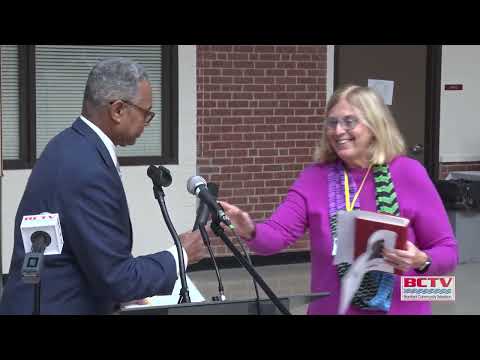
Preston C. Tisdale, a civil-rights attorney, delivered the keynote at the Martin Luther King Heritage Foundation of North Branford’s 41st annual MLK breakfast on Jan. 19 at North Branford High School, saying the moment requires renewed legal and civic effort to counter what he called a retrenchment of civil-rights gains.
Tisdale framed his remarks around history and law, reading Langston Hughes’ ‘‘Let America Be America Again’’ and recounting cases that he said demonstrate both the persistence of injustice and the potential for corrective action. He told the audience the dispute over historic daguerreotypes in the Lanier case had been settled and said the images ‘‘are now going to the International African American Museum in Charleston, South Carolina. I would say by the summer, they will be there,’’ a transfer he described as part of restoring historical record and dignity.
Why it matters: Tisdale used the keynote to link local civic observance to national legal and cultural debates — underscoring how legal rulings, historical memory and public education interact to shape opportunities for equality.
Tisdale criticized modern legal barriers to discrimination claims and warned of judicial and policy shifts he said weaken protections. ‘‘The Supreme Court gave the green light to racial profiling by ICE in homeland security,’’ he said, framing recent rulings as part of a larger retrenchment that requires sustained attention. He also said discrimination lawsuits have become harder to win without clear, direct evidence and urged continued legal advocacy: ‘‘Most of these lawyers nowadays won’t take these cases. I’m proud to say my firm still does.’’
The keynote mixed history and contemporary law. Tisdale recalled civil-rights-era campaigns and the role of media in exposing injustice, and he urged the audience to educate themselves on historical context. He cited episodes including Tulsa and Wilmington as examples of how wealth and opportunity were violently disrupted for Black communities and described the work to recover both truth and reparative remedies.
Tisdale repeatedly returned to the theme of hope and action. Quoting Langston Hughes and Dr. King, he called for community engagement, better education about history and legal strategies that preserve accountability. His remarks were followed by awards, poetry readings and community tributes during the program.
The program continued with student poetry readings, community awards and a benediction; organizers did not announce any formal policy actions tied to the keynote. The foundation plans to continue local programming including the "Meals for the Mind" community conversation series.