Get Full Government Meeting Transcripts, Videos, & Alerts Forever!
Get email alerts on the Dhcd Audit topic
No spam. Unsubscribe anytime.
City auditor flags gaps in DHCD emergency procedures and p‑card controls; agency vows fixes by April 30
Summary
A city audit found Department of Housing and Community Development (DHCD) emergency response procedures lack key task-level steps and that procurement‑card reconciliations and Neighborly case documentation were often incomplete or late. DHCD pledged to update SOPs, tighten reconciliations and improve Neighborly tracking, with SOP updates due April 30.
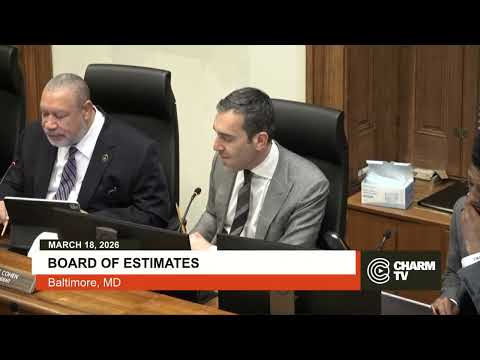
City Auditor Josh Pash told the Baltimore City Board of Estimates on March 18 that a biennial performance audit of the Department of Housing and Community Development (DHCD) identified shortcomings in emergency response procedures, inconsistent case documentation in the Neighborly system and weaknesses in procurement‑card (p‑card) controls that increase the risk of overpayment.
“Our objective was to evaluate DHCD controls over emergency services and clients receiving assistance focusing on providing the services and paying providers,” Pash said. He said auditors extended the review through October 2025 after DHCD restructured its emergency program and found that standard operating procedures (SOPs) do not document specific tasks, timelines or metrics needed to measure timely stabilization following fires and other emergencies.
The audit’s first finding, Pash said, was that DHCD’s Office of Integrated Client Services SOPs define roles but “do not specify key tasks and establish timelines or methods of evaluating performance of duties at the site of emergency and the stabilization process.” Auditors recommended DHCD record expectations such as a one‑hour on‑scene response, a 48‑hour intake completion target and documented reassessment milestones so officials can track performance.
Pash also reported gaps in case creation and closure in Neighborly, the city’s emergency case‑management portal. In a sample of 28 constituents housed in hotels, auditors said seven cases were not created in Neighborly and several extended hotel stays lacked supporting notes. ‘‘Of the remaining 21, 17 were in the hotel for more than 3 days ranging from 1‑33 0 days’’ in the sample and many lacked timely notes or closure, Pash said.
The audit’s third finding covered p‑card management. Pash said DHCD used two p‑cards and that reconciliations were often late: ‘‘From December 2024 to October 2025 there were a total of 777 payments…516 of those transactions were not being reconciled within 30 working days of the bill.’’ He warned that because participating hotels keep city card information on file the risk of overpayment is increased, though auditors said they found no evidence of fraud in this review and noted fraud investigations require a separate forensic scope.
During board questions, members pressed on immediate safeguards. Pash said the priority is stronger reconciliation and supervisor review and recommended reassigning day‑to‑day p‑card activity to staff with detailed reconciliations performed by an independent reviewer rather than leaving reconciliation as the primary responsibility of a senior executive.
Deputy Commissioner Nicole Hart, who leads Homeownership and Housing Preservation at DHCD, said the department already is implementing many changes. Hart said the office will update its SOPs to include specific tasks and targets and to move intake work into Neighborly in real time. “They’re expected to respond in an hour,” she said of ombudsman deployments; she added that DHCD has instituted iPads in the field so intakes are entered directly into the portal.
Hart described operational fixes for p‑cards, including hiring a fiscal technician to perform reconciliations, using Neighborly’s audit log and task functions so approvals are recorded, instituting daily room audits with hotels, and improving attachments and invoice storage in Workday. She told the board DHCD set a target of April 30 to complete SOP updates and begin implementing the corrective actions outlined for Neighborly and p‑card handling.
The board heard assurances from administration officials that the department will apply the improved controls across other DHCD programs and track long‑term compliance; the board noted the audit and DHCD’s corrective actions.
What’s next: DHCD committed to submitting updated SOPs and evidence of implementation steps by April 30 and to continue converting field intakes and approvals into Neighborly and Workday records to support audits and timely reconciliations.