Get Full Government Meeting Transcripts, Videos, & Alerts Forever!
Get email alerts on the Capital Plan Public Safety topic
No spam. Unsubscribe anytime.
Capital-plan review: police and fire request vehicles, tech upgrades and drone capability
Summary
On Feb. 3 the committee reviewed a 10-year capital plan that included two additional patrol vehicles and officers, a $70,000 first-year records-management system with recurring fees, options for a first-responder drone program (~$81,000/year under a five-year contract) and other equipment purchases; staff highlighted supply lead times and NFPA guidance for apparatus replacement.
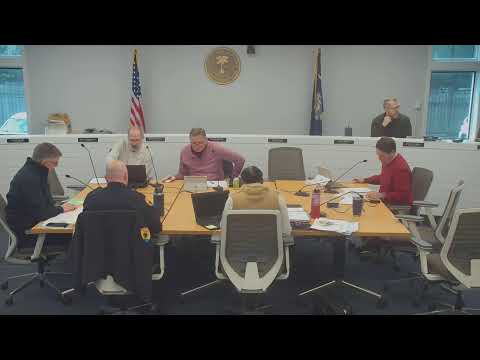
Committee members reviewed the 10-year capital plan for police and fire at the Feb. 3 meeting, focusing on staffing, vehicle replacements, technology upgrades and fire apparatus timelines.
Chief Cornett described requests for two additional patrol vehicles and two new officer positions to handle steady call volume, summer seasonal surges and training obligations. "This would help with quality of life for our officers, help them be able to take their leave, and give us maximum coverage," he said, explaining that split shifts, K‑9 and traffic assignments stretch current staffing during busy periods.
Staff said the police records-management system will require replacement after an acquisition by the vendor left the current system slated for end-of-support. The staff estimate presented was about $70,000 the first year with recurring annual fees in the low‑$20,000 range; staff noted that joint purchases with neighboring jurisdictions could reduce per‑jurisdiction costs.
On unmanned aerial systems, staff presented two options: a lower-cost $37,000 live‑view software option, and a full first-responder drone program priced into a roughly $81,000-per-year, five-year contract that would house a drone in an automated rooftop box and allow dispatch to fly the drone directly to calls. Staff and committee members emphasized benefits for water-rescue calls, crowd monitoring during busy seasons and collision assessment.
Fire leadership said the city signed a contract in Sept. 2024 for a new ladder truck with anticipated delivery in Oct. 2026; they noted lead times (~24 months) and explained that older trucks (a 2003 model in regular reserve use) increase maintenance risk. The chief also detailed other equipment timing: a jet ski ($18,000) and a utility vehicle ($26,000) were deferred to FY27, and a porta-count fit-testing unit for SCBA testing was estimated near $36,000 with a hard-replacement stop in 2029 if failure occurs.
Committee members asked staff to re-check vehicle-replacement sequencing in the capital plan (several years saw lower counts than expected) and to include replacement timing for vehicles the committee expects to rotate on a five‑ to seven‑year cycle.
Next steps: staff will refine sequencing, confirm vendor quotes and pricing, and report adjustments at future budget and committee meetings.