Get Full Government Meeting Transcripts, Videos, & Alerts Forever!
Get email alerts on the Arts Festival topic
No spam. Unsubscribe anytime.
Commission continues debate over $250,000 jazz festival plan; asks producers to coordinate with downtown
Summary
After a multi‑hour presentation and extensive questioning, the Hollywood City Commission voted unanimously to continue consideration of a proposed $250,000 agreement with Rhythm Foundation to revive a jazz festival until a June 3 meeting so staff and the producer can present concrete plans to engage downtown businesses and clarify food, ticketing and public‑safety logistics.
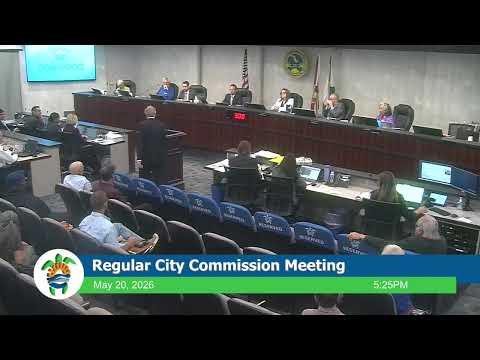
The Hollywood City Commission on May 20 continued, to a June 3 meeting, a proposal to authorize an agreement with Rhythm Foundation Inc. to produce a revived Hollywood jazz festival and associated Arts Park programming that the organization estimates could cost up to $250,000. The proposal would use $200,000 in city funds and anticipates an additional $50,000 in grant support.
Rhythm Foundation founder James Quinlan described a daytime event the group is calling the "Hollywood Real Jazz Picnic" that would stage three nationally or internationally recognized groups and three local acts in a 2 p.m. to 8 p.m. program on Nov. 21 and include a Friday‑night tree‑lighting music component. Quinlan said the conceptual plan includes a culinary picnic component, partnerships with local businesses to provide preordered picnic meals, and a verbal agreement with SiriusXM's Real Jazz channel for live coverage and promotion.
Adam (Rhythm Foundation CEO/partner) told commissioners the festival would be a gated but free‑to‑the‑public event with preregistration; the organization proposed reserved picnic areas and hospitality amenities as optional paid elements. "We want people to register and engage in the hospitality amenities of the event," he said, adding the group planned different tiers of seating and amenity packages.
Commissioners pressed Rhythm Foundation and city staff for specifics. Several elected officials said they supported the festival concept but wanted clear measures to ensure the event drives customers into downtown restaurants rather than drawing parkgoers away from nearby businesses. Commissioner Hernandez summarized concerns voiced by downtown business owners: "We spend millions to bring people to downtown, yet we pay other entities to [produce events] that compete with brick‑and‑mortar businesses. I can't support this until you show me how downtown benefits."
Other commissioners suggested mitigation measures that could be part of the returning proposal: (1) documented outreach and signed commitments from downtown restaurants to sell picnic packages or participate through an app or vendors; (2) a plan for gating, security and policing costs; (3) a marketing and tracking plan (Quinlan said the festival will use people‑movement data systems to measure where attendees go after leaving the Arts Park); (4) a scaled budget alternative if anticipated grants do not materialize.
Rhythm Foundation said they would prioritize downtown businesses and limit outside vendors; Quinlan said overhead or management margin would be "less than 10%" of the budget. City staff confirmed the $250,000 figure is a cap and that the city has already committed $200,000 with the remainder expected from grants that are not yet guaranteed.
Because several commissioners said the Rhythm team had not yet secured formal commitments from downtown restaurants and the Downtown Business Association, the commission voted unanimously to continue the item to the June 3 commission meeting at 2 p.m. and directed Rhythm Foundation and staff to meet with downtown stakeholders and return with a concrete operating plan and clarified budget assumptions.
The commission’s direction leaves several open questions to be resolved by the June 3 deadline: whether the event will remain a free, gated show with paid hospitality tiers or be ticketed; precise commitments from downtown businesses for picnic package fulfillment; an explicit security plan and cost allocation for policing and gate control; and revised budget scenarios if grant revenue is not received.
If Rhythm Foundation and staff return with signed downtown commitments and clear operational details, commissioners indicated they would be more likely to approve the proposal. Absent that detail, several commissioners said they would not support spending the requested funds.