Get Full Government Meeting Transcripts, Videos, & Alerts Forever!
Get email alerts on the County Finance topic
No spam. Unsubscribe anytime.
Finance director details FY26 Q3 results, PFAS costs and active capital projects
Summary
Treasurer/Finance Director Carol Coppola told delegates the regional government managed just under $86 million as of March 31, 2026, reported stable revenue and noted PFAS remediation spending to date plus funding sources including $4M ARPA, borrowing authorized just under $12M and a pending $3M congressionally directed allocation.
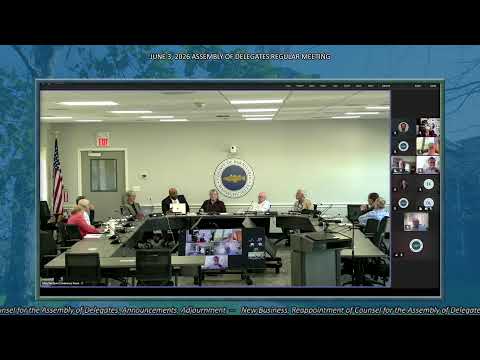
Treasurer and Finance Director Carol Coppola presented the Cape Cod Regional Government’s fiscal‑year 2026 third‑quarter financial results to the Assembly on June 3, summarizing revenues, expenditures and several items requiring follow up.
Coppola said the combined funds under management were just under $86 million as of March 31, 2026. The organization manages two operating budgets (general fund and Cape Cod Commission), one enterprise fund (dredge), 78 grants and special revenue funds, seven trust and stabilization funds, and 12 active capital funds. Bank accounts were reconciled as of March 31 and money‑market rates in March ranged approximately 3.15–3.83%.
On expenditures, Coppola said salary and fringe costs account for roughly 74% of the operating budget and that roughly 80% of the general fund was expended or encumbered as of March 31. She noted registry of deeds receipts were running higher than FY25 (up about 3.3% through March), and that dredge revenue and post‑March project signings left the dredge enterprise in a strong position.
Coppola then summarized PFAS‑related spending and funding sources. She said ARPA funded $4,000,000 in PFAS planning and remediation, borrowing just under $12,000,000 has been authorized, and the county is in the process of receiving a $3,000,000 congressionally directed allocation. She said additional county general fund support and principal forgiveness connected to a Massachusetts Clean Water Trust (MCWT) project have reduced near‑term borrowing costs; outstanding purchase orders added about $300,000 to reported expenditures through March 31.
Delegates asked for more detail on the $40 million of active capital project authorizations. Coppola explained the $40 million reflects outstanding capital projects authorized across multiple years (since about 2015) and agreed to provide cumulative spending numbers and a clearer breakdown of what remains to be funded this fiscal year.
On the question of recovering PFAS remediation costs, Coppola said whether recovered funds (including ARPA dollars) would retain original spending restrictions depends on how the funds are received and any applicable restrictions. She also acknowledged ongoing uncertainty about total county PFAS liability and noted prior estimates discussed by delegates in the meeting of roughly $50–$60 million.
Why it matters: The county’s financial posture determines its ability to fund core services, capital projects and long‑term remediation liabilities (PFAS). Understanding the timing of assessments, reserves and restrictions on recovered funds is material for budgeting and oversight.
What’s next: Coppola will provide follow‑up detail on cumulative capital expenditures, outstanding purchase orders, and any clarifying legal guidance about restrictions on recovered ARPA or other funds.
Sources: Presentation and Q&A with Treasurer/Finance Director Carol Coppola, Assembly of Delegates meeting, June 3, 2026.