Get Full Government Meeting Transcripts, Videos, & Alerts Forever!
Get email alerts on the Truancy topic
No spam. Unsubscribe anytime.
County reshapes truancy program; community partners call for a reconvening to avoid service gaps
Summary
Commissioners said a county-led change to the truancy program has prompted two separate supplemental requests and stirred concern that partners were not fully convened; providers urged a stakeholder meeting to align roles and prevent disruption.
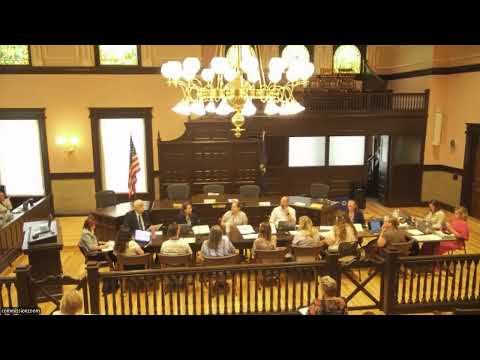
County commissioners and youth-service providers spent much of the meeting on how the county’s recent decision will change truancy services and who should deliver them.
"We have a couple of requests before us," a county commissioner said when refocusing the meeting on truancy supplemental requests, noting an MOU with the Department for Children and Families is being rewritten. Partners described competing applications and urged coordination to protect continuity of services.
Kelsey Dockman, executive director of the Center for Supportive Communities, said CSC will continue operating through an AmeriCorps grant and emphasized case-management and mentoring supports. "Our student referrals increased by, I think, 320%," she said when describing recent demand and the need for extra capacity.
O'Connell Children's Shelter, which has historically managed high‑school truancy work, said the county’s shift changes a decade of operations and urged inclusion of experienced providers in the new MOU. An O'Connell representative said the agency attempted to convene partners earlier but was unable to gather everyone before supplemental requests were filed.
Why it matters: Commissioners said the county is establishing a new county-funded truancy program and will revise its MOU with DCF. Providers warned that if long‑standing partners are excluded, families could lose services or be routed into criminal-justice pathways for problems that, under state law, are child‑in‑need-of‑care matters rather than criminal matters.
Competing requests and next steps: Multiple organizations submitted supplemental requests to provide truancy services; commissioners asked whether partners coordinated before filing. O'Connell said it tried to bring partners together when it learned a change might occur, but the meeting did not happen. Commissioners recommended a stakeholder meeting to define roles, agree on service rates and ensure the MOU includes experienced community partners.
Context and coordination: Speakers pointed to existing cross-sector efforts—multidisciplinary school‑based meetings, the county’s Community Health Improvement Plan and ad-hoc convenings by Justice Matters and the Chamber of Commerce—as foundations for an ongoing youth‑provider forum. Several participants encouraged regular, documented coordination (MOUs, shared data and training) to prevent duplication and maintain service continuity.
The meeting closed with commissioners directing staff to continue discussions and with partners agreeing to reconvene to align on truancy roles and funding proposals before the next budget deliberations.