Get Full Government Meeting Transcripts, Videos, & Alerts Forever!
Get email alerts on the Kcna Authority topic
No spam. Unsubscribe anytime.
AG counsel: KCNA board retains operational, budgetary authority after HB 314
Summary
Christopher Thacker, general counsel to the Kentucky Attorney General, told the Information Technology Oversight Committee that HB 314 altered board composition and administration but did not remove statutory duties; he said the KCNA board still has policy, operational and contracting authority under the cited KRS provisions.
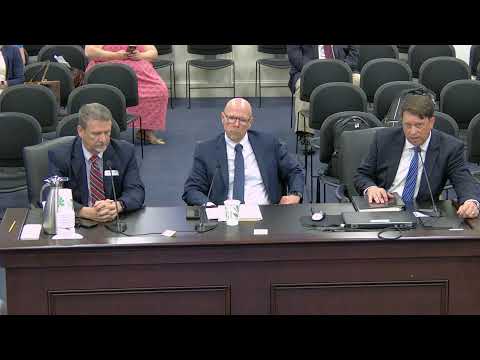
Christopher Thacker, general counsel for the Office of the Attorney General, told the Information Technology Oversight Committee that a written opinion concludes the Kentucky Communications Network Authority board retains operational and budgetary authority after enactment of HB 314.
The opinion traces the legislature’s intent to the statutory language and notes the statute’s provisions defining the board’s duties—cited in the testimony as KRS 154.15‑030(3) subparts a–f—were not changed by HB 314. "Implement" and other action verbs in the statute, Thacker said, indicate the board can issue directions that staff are legally obligated to carry out and that the board has the "power of the purse," including approval authority over physical planning, appropriations and certain contracts.
Thacker told the committee the law supports reading the board as more than advisory. He said that, while HB 314 removed the office-level executive director of KCNA and assigned administrative staffing duties to the executive director of the Cabinet for Operations and Technology, that change does not, on its face, strip the board of its policy or contracting authority. He added that statutory language referencing operations, monitoring and expansion are action-oriented and consistent with a board that can direct staff to implement policy.
The attorney general’s office also reviewed historical practice and minutes going back to the board’s creation, Thacker said, and found past practice included seeking board approval for settlements and contracts. He pointed to pending litigation involving OpenFiber as an example in which the board has historically been asked to approve settlement actions.
When committee members asked whether actions taken without board approval could be invalid, Thacker said unauthorized acts that fall within the board's powers, and that are not properly delegated, carry a high risk of being deemed ultra vires and thus without statutory effect.
Thacker cautioned that the statute’s reassignment of staffing to another cabinet creates practical complications—"they've got to rely on COT now to provide staffing"—but that the reassignment does not itself confer new discretionary powers to the cabinet director that would supplant the board's control. The opinion recommends careful delineation of delegated authorities and documentation of which actions must return to the board.
The committee received the opinion, took questions from members, and thanked Thacker for his testimony. No formal action followed from this presentation; the committee moved on to the next agenda item.