Get Full Government Meeting Transcripts, Videos, & Alerts Forever!
Get email alerts on the Workforce Development topic
No spam. Unsubscribe anytime.
School representative: vocational program trains students in drones and fiber optics to create local jobs
Summary
Speakers from a rural school described a grant-funded program that trains students in drone operations and fiber-optic work, saying it creates immediate job pathways for graduates, assists local farmers, and depends on continued grant support.
A school representative said a grant-funded vocational program at a rural school trains students in drone operations and fiber-optic work to create local employment opportunities that do not require college.
The school representative said, "We're, a rural school in a distressed county, and there is no way, as a school district that we could put this type of program together." They told listeners the program aims to "give our kids an opportunity for employment without going to college" and to help local agriculture by analyzing and spraying crops, noting there is already "a waiting list of farmers that want us to come out there and analyze their crops, spray their crops." The representative added that a partner, BTC Fiber, "comes in and they send their top fiber optic technicians" so students can become fiber-optic technicians after graduation.
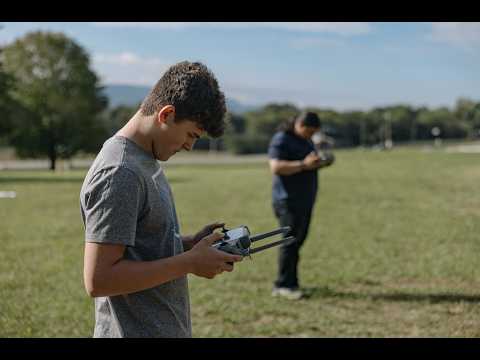
The program combines classroom instruction and hands-on technical training. A student who spoke about the drone track said, "We learn about the drones. We learn about technology behind it. It's very big in engineering," and described the work as "very fun" and a pathway to a career such as mechanical engineering. Another speaker said the program has opened "so many opportunities, so many doors" and made them proud of their community and skills.
A public commenter urged continued funding, saying the technology could keep people out of dangerous situations in search-and-rescue work and has wider applications beyond the school. An instructor emphasized that the class also reinforces workplace habits, noting it helps students who lack home supports and can lead directly to jobs with "good benefits, making good money to take care of yourself and your family."
Program supporters framed the school initiative as both workforce development and community service: students gain technical credentials and local farmers gain crop-analytics and spraying support. Speakers repeatedly linked the program's viability to the grant, saying that "without this grant, there is no way that these kids would have that opportunity."
The discussion in the transcript consists of program descriptions and testimonials; no formal vote or decision is recorded in the provided segments. The next procedural step or funding decision was not specified in the transcript.