Get Full Government Meeting Transcripts, Videos, & Alerts Forever!
Get email alerts on the Public Safety topic
No spam. Unsubscribe anytime.
Bolivar fire chief reports 1,582 calls in 2024, outlines equipment and station plans
Summary
Bolivar’s fire chief told the board the department ran 1,582 calls last year, highlighted a 5:32 average turnout time, described staffing levels and mutual-aid activity, and outlined capital purchases and training-ground plans funded partly by state grants.
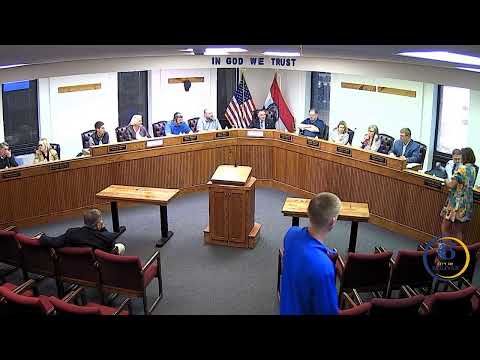
The fire chief delivered the Bolivar Fire Department’s annual report, saying the department ran 1,582 calls in 2024 and that medical calls made up the bulk of responses. "We ran 1,582 calls," the chief said in the council meeting packet presentation.
The chief described the call mix as roughly 1,004 medical incidents and 66 actual fires, and said the department’s average turnout time — the interval from station alarm to arrival on scene — is 5 minutes, 32 seconds. "The average is 5 minutes and 32 seconds," the chief said, adding that dispatch processing time precedes that turnout interval.
The report summarized staffing as 15 full-time firefighters plus the chief and an administrative assistant, with six budgeted part-time personnel who each typically work about one shift a month to help backfill vacancies and absences. The chief said the department provided mutual aid 44 times last year and received mutual aid 21 times.
On costs and capital planning, the chief told the board that equipment prices have risen and walked through a long-range replacement schedule the department has drafted through 2036 to avoid last-minute budget shortfalls. He said a new engine purchased earlier is being outfitted in Springfield and is scheduled to enter service at the end of June. The chief said the department plans to buy roughly $95,000 in air packs (SCBA) next year, and that roughly half of that expense is expected to be covered by state funds.
The chief also outlined a training-ground project at the Killingsworth site, supported by a state grant and initial local funding intended to pay for a concrete pad, live-burn props and additional training equipment. The chief framed the investment as a way to improve on-the-job skills and maintain response readiness as the city grows.
Board member questions focused on staffing levels and volunteers; the chief confirmed the personnel counts and described part-time staffing and mutual-aid protocols. He described a multi-station planning process that could include Station 1 renovation and longer-term discussion about a possible Station 3 to improve coverage on the city’s east side.
The board took no formal fiscal action during the presentation; the chief said the department’s capital plan will be carried forward to the budget process.