Get Full Government Meeting Transcripts, Videos, & Alerts Forever!
Get email alerts on the Dramaproduction topic
No spam. Unsubscribe anytime.
District cites legal precedent in decision to bar student play about suicide; community voice concerns
Summary
At a Whitehall School District board meeting, administrators defended their decision to prevent a student production addressing suicide from being presented as a school assembly, describing supervision lapses on an out'of'district trip. Public commenters gave divided responses, with survivors urging open discussion and others criticizing the handling of staff and communications.
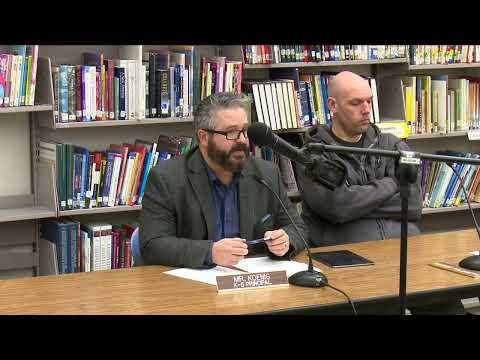
At a Whitehall School District board meeting, district attorney Miss Cleve and school leaders defended the administration's decision to decline a school assembly of a play that deals with suicide and related material, saying the choice was guided by student safety and settled legal precedent.
Miss Cleve told the board that, after consulting with the Montana Department of Public Health and Human Services and the Montana Thespian Project, administrators concluded the play was not appropriate for a school assembly. She cited U.S. Supreme Court precedent, including Hazelwood v. Kuhlmeier, to say school officials have authority to make curricular and school'assembly decisions. "School district officials get to do" curricular screening, she said, and noted the students instead participated in the festival in Missoula where the Thespian Project provided supports for potentially triggering material.
Superintendent Hannah Neeskins (as referenced in public comment) and Principal Jason Slater told the board they reviewed the script, considered timing and audience, and supported the decision. Slater said administrators watched the production and concluded it would not be appropriate for a full student assembly at this time.
The administration also described concerns about student supervision during the Missoula trip. Miss Cleve said the district's investigation found instances where students were not supervised as required and that, in at least one instance, a student's safety was endangered. She said staff and parents were interviewed and that a staff member's contract term had ended; an employee chose to resign at the end of that term. The district declined to discuss private student details publicly, citing student privacy.
Public comment drew sharply divided views. Several parents, former students and community members urged more open discussion about suicide and credited the play with addressing real teen struggles. "I grew up in Whitehall'and I've had four more people commit suicide," said Samara Burnett, urging the board to consider the value of candid conversations. Student speaker Katie Chadwick described her own struggles with suicidal thoughts and said community discussion can help break silence.
Other commenters defended the administration's authority and handling. John Diefenderfer said the board and administration made the right decision "based on benefit of all the children," and several speakers, including activities director Jason Salvani and other chaperones, praised the students' performance at the Montana Thespian Festival and spoke in support of staff.
Several speakers raised procedural and personnel concerns: some said the play had been withdrawn as a school assembly before outside reviews and questioned whether district discipline and communications with parents were accurate. A public commenter who identified experience with the matter said she felt entitled to due process and representation when interviewed. The district attorney responded that parents were contacted and that investigators had interviewed staff and students as part of the review, but she declined to offer private student details in public.
The board did not take formal disciplinary action on the record at the meeting; community members asked the board to provide more clarity about personnel outcomes and any investigations. The meeting closed after a period of extended public comment.