Get Full Government Meeting Transcripts, Videos, & Alerts Forever!
Get email alerts on the Special Education topic
No spam. Unsubscribe anytime.
Special-education team asks board to help build community partnerships as transition needs triple
Summary
Special-education staff told the board that transition planning for students with IEPs will need to triple over the next five years and asked the board to help foster partnerships with local businesses and colleges to provide job-shadowing, internships and mentor opportunities.
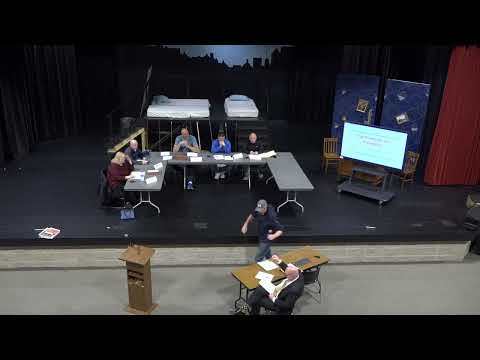
Special-education staff told the Williams Bay School Board on April 14 that transition planning for students with individualized education programs (IEPs) will need significantly more capacity over the next five years and asked the board and community to help identify additional partnerships and supports.
Chris (introduced by board member Klausmo) and the special-education team said the district expects the number of students requiring transitional supports to grow from three seniors this year to nine seniors in five years and a total pipeline of roughly 33 students age 14 and older needing services over coming years. "We will have to triple our transition planning over the next five years," one administrator said, describing plans to expand connections with local businesses, technical colleges and community agencies for job-shadowing and internships.
Tyler Weimer described work already underway, including visits to UW–Whitewater's Opening Horizons and Gateway Technical College events to expose students to postsecondary supports. Karen Milke highlighted local employer partnerships that currently provide on-site job mentoring and two successful placements. "We have since placed 2 students with employers... both of them continue to be very successful in their positions," Milke said.
Special-education staff asked the board to leverage its community networks to broaden partnerships and said they plan targeted outreach to local organizations in coming weeks. The report emphasized building work-readiness skills—communication, financial literacy and independent-living skills—alongside community-based experiences.
Board members thanked the team and encouraged staff to return with specific partnership requests and timelines; the board did not take a formal vote on new funding during the meeting.