Get Full Government Meeting Transcripts, Videos, & Alerts Forever!
Get email alerts on the Compensation topic
No spam. Unsubscribe anytime.
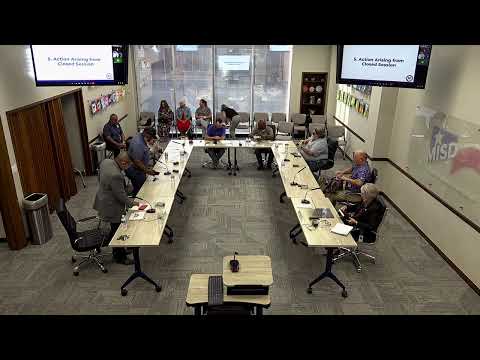
Trustees approve $1,250 one-time retention incentive and 2026–27 compensation plan after debate over healthcare and amendments
Summary
After lengthy debate and multiple amendment attempts focused on employee health-care cost containment and funding sources, the board approved a one-time $1,250 retention incentive and a 2026–27 compensation plan that generally provides 1% increases for select pay grades and 2% for others; the compensation plan vote was recorded in the transcript as passing '5 to' (transcript does not print the full opposing tally).
Midland ISD administration recommended a one-time retention incentive and presented the district’s proposed 2026–27 compensation plan amid questions about revenues, royalties and long-term fiscal sustainability.
Administration told trustees the one-time retention payment would be $1,250 for qualifying full-time TRS-eligible employees who were hired by Jan. 4, 2026, active in the district’s payroll system as of June 1, 2026, and employed through Jan. 31, 2027; payments would be made by June 2026 and would be recovered from an employee’s final paycheck if they left before Jan. 31, 2027. Administration estimated the incentive would cost approximately $2.8 million and proposed transferring up to $3 million to the district’s self-insurance fund to help sustain future years.
Trustee Dr. Friess introduced multiple amendments (motions 1–8) aimed at health-care cost reduction and reallocation of funding, including expanding clinic hours, evaluating international pharmacy options, expanding telehealth, negotiating lab/radiology pricing and a proposal to prepare a funding plan that could include a central-administration hiring freeze. The board debated whether the amendments were "germane" to the retention-incentive resolution and followed procedural steps that included a reconsideration and revote on one amendment.
"This onetime payment will be for $1,250" administration said, walking through eligibility criteria and projected financial impacts. Trustees discussed whether to redirect incentive funds to employee health-care premiums and whether administrative pay increases should be limited to fund health-care supplements.
Following the amendment debate and procedural votes, the board approved the one-time retention incentive resolution (the transcript records the vote as "Motion passes 7 0"). The board then considered the broader 2026–27 compensation plan, which administration characterized as a combination of targeted and across-the-board adjustments: recommended increases included 1% for teachers, campus leadership and certain professional pay grades, and 2% for other pay grades. Trustees debated budget variables—minerals royalties and investment earnings— and long-term payroll pressures (administration said payroll is roughly 78.8% of the total budget), then voted to approve the compensation plan; the transcript records the outcome as "motion passes 5 to" without printing a complete vote breakdown in the provided text.
Trustees and staff agreed to pursue follow-up work on health-care costs and recommended board workshops and studies; several trustees voiced concern about long-term fiscal sustainability and recapture exposure. The meeting moved to closed session after the votes.