Get Full Government Meeting Transcripts, Videos, & Alerts Forever!
Get email alerts on the Utility Rates topic
No spam. Unsubscribe anytime.
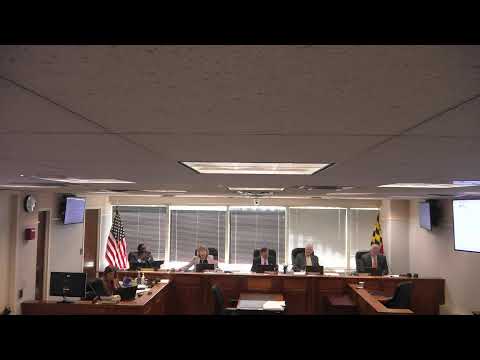
PSC hears extended arguments over Pepco tariff; staff urges rejection, commission takes matter under advisement
Summary
Staff recommended rejecting Pepco’s proposed distribution tariff, arguing it is confusing and procedurally improper; Pepco counsel disputed staff’s reading and defended the company’s proposed rate-handling mechanism (RDM); commissioners took the issue under advisement with no final vote recorded.
Staff presented a formal recommendation that the commission reject Pepco’s proposed tariff implementing distribution rates in Case No. 9820, calling the filing “cumbersome,” “confusing” and unnecessary under the Public Utilities Article. Ruthie Herman, speaking for staff, referenced prior Commission practice and an appellate case discussed in the record and urged rejection on procedural and transparency grounds.
“Staff does recommend that the commission reject the proposed tariff. It is cumbersome. It’s confusing. It’s not transparent and it’s not required by law,” Herman told the commissioners.
Pepco counsel (referred to in the record as Ms. Curry) replied that, in her view, the Public Utilities Article requires rates to go into effect under operation of law absent an appropriate mechanism; she said Pepco did not intend to voluntarily give up recovery for the roughly 17‑day interval at issue and defended the Revenue Deferral Mechanism (RDM) the company proposed to preserve statutory timings while offsetting short-term charges. “We do not voluntarily agree to push our filing back by 2 and a half weeks,” she told the commission when asked whether Pepco would amend its filed effective date.
Commissioners and staff engaged in detailed questioning about earlier orders (case 9655 and an order circulated in the hearing), estoppel doctrines, whether a prior joint request that extended an operation-of-law date created precedent, and whether Pepco’s revised rates from rebuttal testimony could be used to reset an effective date. People’s Counsel representatives and other parties offered alternative readings of the statute and precedent; Michael San Martino (People’s Counsel) suggested Pepco could voluntarily amend its proposed effective date if it wished to forego recovery for the interim period.
Throughout the exchange, staff emphasized the narrowness of its argument: that the proposed tariff as filed is unnecessary and that a prior example of a jointly requested extension is instructive for how the commission handled a similar situation. Pepco counsel argued the RDM is lawful, that it benefits all parties by preserving rate certainty and the briefing schedule, and that denial would result in rates going into effect under operation of law.
After extended legal and procedural discussion, the chair said the commission would take the matter under advisement and review the transcript and legal positions before taking final action.
No final vote on the Pepco tariff was recorded in the hearing.