Get Full Government Meeting Transcripts, Videos, & Alerts Forever!
Get email alerts on the Student Data And Assessment topic
No spam. Unsubscribe anytime.
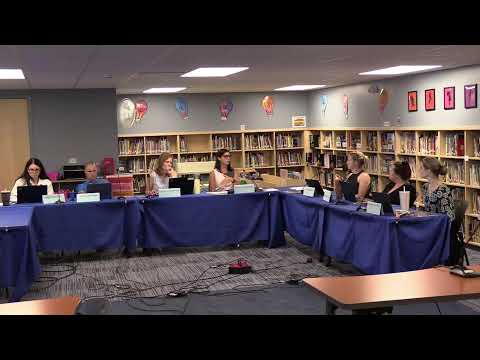
Principal details curriculum gains and raises concerns about public assessment slides; board discusses data dashboard
Summary
Principal Molinari presented year‑end enrollment and curriculum highlights, cited gains in reading and math programs, and the board debated how to present assessment data publicly and whether to include students who opt out; administrators proposed a multi‑source data dashboard to provide a fuller picture without revealing individual student data.
Principal Molinari delivered the year‑end report, saying district enrollment is up one student to about 564 and summarizing highlights across grade levels and schools.
The report showcased curriculum work — including the first year of unified environmental science, CKLA implementation K–3, and continued rollout of Eureka Math Squared in early grades — plus project‑based culminating activities and professional development and PLC time for teachers. Administrators described new and sustained student supports, including a Blue Jay recognition system and Wolfpack leaders, and noted recently added roles (an MTSS interventionist and school psychologist) to bolster Tier 1 and Tier 2 supports.
Administrators presented AIMSweb data showing year‑to‑year growth and spoke positively about math program adoption. A board member asked how students who opt out of standardized assessments are represented in public reports. Staff said roughly 98 percent of students take AIMSweb and that alternate measures — classroom assessments, report‑card narratives, IEP/proxy reports and targeted local data — are used to understand students who do not participate in normed assessments. The district acknowledged that some parents remain concerned that public dashboards do not reflect every child’s assessment status and invited further conversation to design a public dashboard that draws on multiple sources while protecting student privacy.
On disciplinary data, administrators noted behavior incident counts by category (including 62 bus incidents versus 75 the prior year) and said they are considering replacing the numeric slide in public presentations because small counts can become identifiable at the classroom level. Board members suggested presenting trend descriptions or category summaries rather than fine‑grained counts.
What happens next: administrators plan to continue building a multi‑source data dashboard for public use and offered to meet with board members and community representatives to refine what metrics should be included while ensuring compliance with privacy laws and avoiding disclosure of individual students.