Get Full Government Meeting Transcripts, Videos, & Alerts Forever!
Get email alerts on the Comprehensive Plan topic
No spam. Unsubscribe anytime.
Titusville commission recommends retransmittal of comprehensive-plan amendments after state review
Summary
Planning staff told the commission the state flagged several proposed comprehensive-plan changes as “more restrictive or burdensome,” and the commission unanimously recommended transmitting revised language to city council for the state’s review and public hearings.
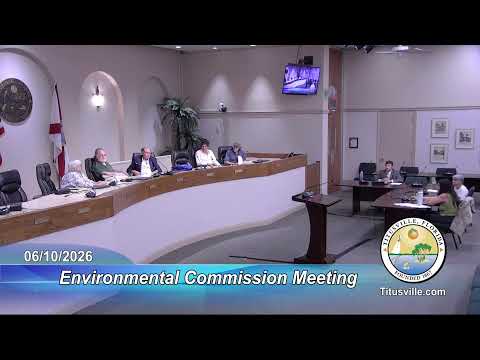
Titusville’s Environmental Commission voted unanimously June 10 to recommend that city council retransmit a revised evaluation and appraisal report (EAR) to the state after Florida Commerce identified portions of the city’s proposed comprehensive-plan amendments as “more restrictive or burdensome.”
Planning staff member Eddie presented the EAR and told commissioners that, "At least every seven years, pursuant to rule chapter 73C-49, Florida Administrative Code, the city is required to determine whether the need exists to amend the comprehensive plan." He said the state review found several policies in conflict with the application of the cited law — referred to in the meeting as Senate Bill 180 — and marked some language non‑void, requiring small edits to proceed.
The presentation identified three policy groups the state flagged as definitively more restrictive and several others the state classified as a caution (“yellow light”), meaning the city could adopt them but should expect the possibility of new, more restrictive standards resulting from future implementation. Eddie said staff proposed limited wording changes — examples included replacing “require” with “encourage” and changing prohibitions to “avoid” — so the city could move forward without running afoul of the state deadline.
Commission members debated the legal context and pending litigation; one commissioner noted there were “a couple lawsuits against this provision pending in state court and administrative courts” that could affect timing. With that context, the commission voted to recommend that city council transmit the revised EAR for city-level public hearings (city council is scheduled to hold transmittal hearings on July 14, per the presentation).
What happens next: The commission’s recommendation goes to city council, which will decide whether to transmit the package to the state. The state’s letter and the transmittal package will guide staff and the council on which specific policy wording must be adjusted before final adoption.