Get Full Government Meeting Transcripts, Videos, & Alerts Forever!
Get email alerts on the PFAS Contamination topic
No spam. Unsubscribe anytime.
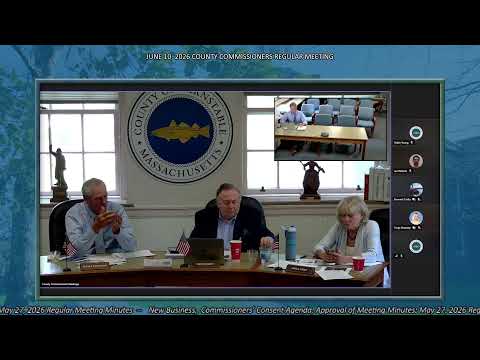
Hyannis community group tells Barnstable County PFAS plumes persist; calls for targeted testing and blood screenings
Summary
Community members and a hydrogeologist told Barnstable County commissioners that PFAS from historical firefighter-foam use has produced multiple interacting groundwater plumes reaching public wells and surface waters; presenters urged targeted regional modeling, expanded blood testing, and state public-health intervention.
A community-led Hyannis PFAS group and its technical advisers told the Barnstable County board that decades of firefighting-foam use at the former municipal firefighter training academy and airport have created multiple, interacting PFAS plumes that continue to move through the Cape Cod aquifer and into public waters.
"The airport's cap is not necessarily functioning properly," said Chris Buicki, chair of the Sierra Club's Cape Cod and Islands group, summarizing the group's technical review and community sampling. He and the group's hydrogeologist warned that carbon filtration at the Maher wellfield does not fully capture the airport plume and that PFAS continues to move downstream toward Mill Creek and Lewis Bay.
Why it matters: Presenters said historical exposures were high and persistent, and that many residents who used public water while the plume was active have not been blood-tested. They urged county support for regional modeling, targeted sampling of unattributed plumes, expanded low- or no-cost blood testing, and clinician training so exposed residents can get medical interpretation and care.
What county leaders said: Commissioners and staff applauded the community's work and asked staff and counsel to check statutory authority before adopting loan-based or subsidized programs (such as a proposed $65,000 pilot power-resiliency loan fund discussed earlier in the meeting). The board agreed to press state public-health agencies to help set up testing and clinician guidance and welcomed the group's upcoming forum that includes invitations to DEP and DPH officials.
Quote: "We found that the airport's cap is not fully capturing the plume," the group said; presenters called for "regional modeling and targeted sampling" and for state public-health interventions, including blood testing and clinician guidance.
Next steps: The Hyannis PFAS group will host a public forum and invited county representatives and state agencies; commissioners asked staff to follow up on public-health outreach and to explore grant-funded options for targeted sampling and mitigation.