Get Full Government Meeting Transcripts, Videos, & Alerts Forever!
Get email alerts on the Records And Transparency topic
No spam. Unsubscribe anytime.
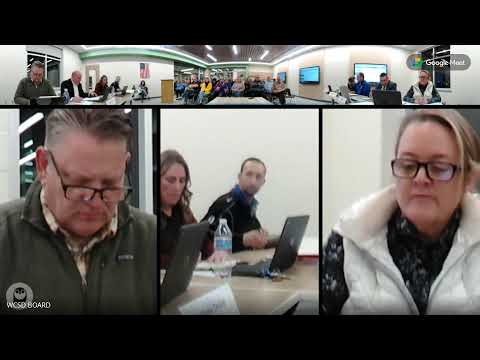
Board directs superintendent to provide high-level summaries of open-records requests after trustees raise workload and privacy concerns
Summary
Faced with dozens of record requests and public concern about legal fees, the Wrightstown board voted to have the superintendent provide high-level summaries of open-records requests and volumes rather than full responses; trustees cited privacy, redaction workload and precedent as reasons for limiting full-response circulation.
The Wrightstown board on April 16 voted to direct Superintendent Ron Starry to provide the board with high-level summaries of open-records requests — categorized trends and notable issues — rather than requiring full copies of every response.
Board member Rain had proposed that the full board receive copies of open-records responses so trustees could see what the public was being given. Superintendent Starry reported he had compiled a tracking spreadsheet showing roughly 75 requests when the memo was prepared and said the total since January has since risen into the eighties. He outlined three options for the board: keep the current practice (board access to a tracking log), direct administration to provide high-level summaries by category, or require full responses and formalize the process in policy.
Starry said concerns included workload for staff processing detailed requests, the need to redact student and staff information, and the risk of blurring governance and operational responsibilities. He recommended option two — summaries of categories, volumes and notable issues — as a balance between transparency and privacy/workload constraints.
Trustees debated the trade-offs. One trustee said staff- and student-level records must remain protected and that broad summaries would help the board spot trends without risking disclosure. Another warned that making full responses routine could create precedent and divert staff time from policymaking and instruction.
After asking each trustee for a preference, the chair moved to direct the superintendent to provide a high-level summary of open-records activity. The motion was seconded and carried by voice vote.
The action followed public comment raising concerns about the volume of legal bills tied to records and recall-related matters and repeated requests from community members for more transparent reporting on legal expenditures. Trustees asked administration to return with a proposed summary format and suggested a quarterly or annual report to highlight trends without publishing every redacted response.