Get Full Government Meeting Transcripts, Videos, & Alerts Forever!
Get email alerts on the Land Use Solar topic
No spam. Unsubscribe anytime.
Vermillion County commissioners reject APC-backed pause on large solar projects
Summary
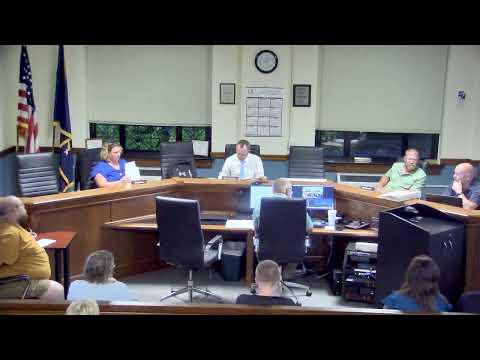
After hours of public comment and expert testimony, the Vermillion County Board of Commissioners voted to reject a proposed text amendment that would have removed large solar power plants as a permitted use and steered future projects to the PUD process for more review. Commissioners said they will provide written reasons to the Area Planning Commission.
The Vermillion County Board of Commissioners voted to reject a proposed amendment to the Unified Development Ordinance that would have removed solar power plants as a permitted use and required developers to seek approval through a planned-unit-development process. The motion to reject carried 2–1 after extended public comment and technical briefing.
The proposed change, presented to the board by Brad Johnson of Brown Rules, was described as a temporary ‘‘pause’’ intended to give the county and the Area Planning Commission (APC) time to monitor two already-approved large projects and refine regulations on setbacks, road impacts, battery chemistry and fire response. Johnson said the draft was not intended as a permanent ban: "It's meant to be an evaluation period of time to see if we've got those regulations calibrated well or not," he told the board.
Supporters of the amendment argued it would let commissioners exercise final review of large projects and allow the APC time to craft protections for roads, property values, and emergency response. Opponents — including several landowners and a county commissioner who spoke against the measure — said the change would curtail property owners' rights and could discourage investment if handled as an effective prohibition.
During debate, Commissioners and staff discussed specific technical points that drove the APC recommendation. Johnson flagged battery-storage concerns and proposed allowing lithium iron phosphate cells while excluding higher-risk chemistries, and recommended provisions for fire breaks, decommissioning guarantees and road-use bonds to mitigate construction impacts. "We do want to be thoughtful; the intent is to get some time to study and make corrections if there are any," Johnson said.
After a series of amendments were proposed — including shortening the APC review timeline to 90 days — the motion to approve the amendment failed for lack of support. The board then moved and voted to reject the ordinance as presented. The commission signaled it will provide the written reasons for rejection to the APC, which the statute requires, and said it would continue to consider regulatory options and engage the public.
What happens next: The rejection sends the APC back to the drawing board if it intends to pursue changes, and it preserves existing paths for solar projects, including the PUD route. Commissioners said they will continue public outreach and may consider targeted UDO revisions or numeric caps if warranted. The APC and staff also discussed the option of expediting a narrower set of rule changes and seeking more data from the two projects already under development.