Get Full Government Meeting Transcripts, Videos, & Alerts Forever!
Get email alerts on the Land And Water Grant topic
No spam. Unsubscribe anytime.
Logansport parks board holds public hearing on $250,000–$1,000,000 Land and Water grant for Riverside Park
Summary
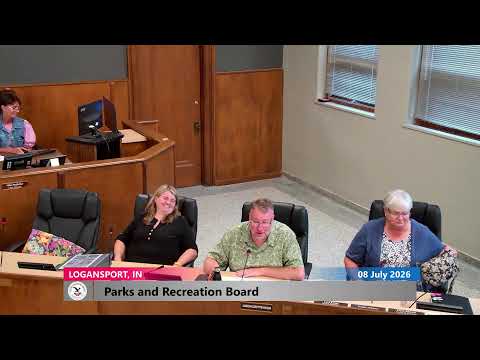
Logansport Parks and Recreation held a public hearing on applying for a Land and Water Conservation Fund grant to redesign Riverside Park. Staff outlined grant rules and deadline; public commenters pressed for repairs to existing facilities and raised concerns about softball-field displacement, emergency access and the park train.
Logansport Parks and Recreation opened a public hearing to discuss seeking a Land and Water Conservation Fund (LWCF) grant to renovate Riverside Park, with staff explaining the federal program, matching requirements and an Aug. 1 application deadline.
Jan, the parks administrator, told attendees the LWCF program is administered federally by the National Park Service and at the state level by the Indiana Department of Natural Resources. Grants range from $250,000 to $1,000,000 and the program will match up to 50% of project costs, Jan said, noting that applicants must have local match available at application and that LWCF projects require federal protection language on developed park land. Jan said Riverside’s five-year master plan was completed in 2024 and that the department has held the required pre-application meetings.
The conceptual plan presented at the hearing includes an accessible, “iconic” playground that can accommodate 40–50 children, a perimeter boardwalk/overlook, expanded parking, a relocated fountain, space for a multiuse field and an event pavilion. Jan described a proposed trackless train depot and said the plan is conceptual, not final, and that construction—if the grant is awarded—would likely not begin until 2028.
Public commenters used the hearing to press two parallel points: repair existing facilities and weigh the neighborhood impacts of a major redesign. “I play a lot of pickleball … the playing surface is cracking,” said Richard Dexter, urging the board to prioritize fixes and to fence the courts so players do not have to retrieve balls across long distances. Board members responded that LWCF money is typically not available for routine maintenance and advised that preservation and ongoing repairs should be addressed through the parks’ operating budget or other funding streams.
Adult softball players raised alarms that the redesign could displace their league or reduce local access. John Burkes, describing decades of volunteer maintenance, asked whether leagues would still be able to use the field during the multi-year timeline; the board said that, if the city receives the grant, construction would be phased and staff would work to give current users additional seasons before any major work commences. Burkes also pressed for help securing and repairing a deteriorated outfield fence.
Members of the Cass County Carousel board and volunteers debated a separate but related element of the plan: whether to keep the existing narrow-gauge train on its current track or replace/relocate it with an ADA-accessible, road-capable “trackless” train. Dan Williams of the carousel urged preservation of the historic ride and its setting; redevelopment supporters said a road-capable, ADA-compliant train could improve access, serve event-center guests and free up prime green space for other park uses. Board members acknowledged lease and safety issues raised by carousel volunteers and said the plan could be adjusted to accommodate both concerns.
Public safety and access also featured in comments. Andrew Myers, who said he is on the city fire department but spoke as a private citizen, cautioned that removing a full drive around the park could increase emergency response times and complicate boat-launch access; the board and staff said service and emergency access routes are part of the concept and would be retained for first responders.
Several residents warned about the city’s fiscal constraints and recent private-sector job losses, questioning whether now is the right time to seek large capital projects; others, including Susie Wombley, urged the board not to pass up the chance to pursue up to $1,000,000 in matching LWCF funds. “There is no way that you pass up the opportunity,” Wombley said, urging the board to proceed with the application process.
The board opened and closed the public hearing by voice vote and then, during the regular meeting that followed, approved a separate item to move the Cass County Soccer Club lease to Houston Park (fee structure noted in the meeting packet). Jan said the LWCF grant is a reimbursement grant—projects are paid by the city up front and reimbursed later if awarded—and reiterated that local matching funds or donor commitments will be required at the time of application.
Next steps: staff said they would continue to assemble supporting materials, coordinate with potential partners for match commitments, and keep leagues and stakeholders informed as the Aug. 1 application deadline approaches. No final construction decision will be made until after the grant outcome and subsequent approvals.