Get Full Government Meeting Transcripts, Videos, & Alerts Forever!
Get email alerts on the School Culture Survey topic
No spam. Unsubscribe anytime.
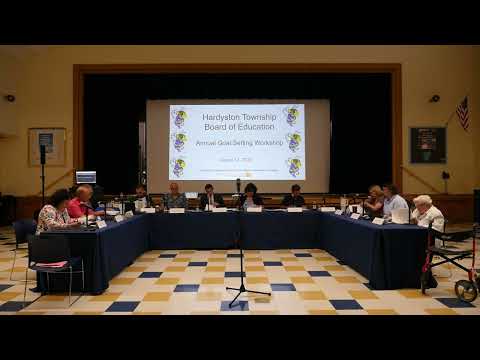
Hardyston board adopts school culture survey policy after heated debate over 'equity' language
Summary
The Hardyston board voted Aug. 12 to adopt a school culture survey policy that calls for validated, evidence‑based instruments (including third‑party options). The debate centered on whether the policy's language should include 'equity' and 'inclusivity' and whether the board is overreaching into administration work.
After prolonged discussion, the Hardyston Township Board of Education voted to adopt Policy 912801, a school culture survey policy, following a split but majority roll-call vote at the Aug. 12 meeting.
The policy establishes a framework for administering validated, evidence-based surveys to students, staff and families, with the stated purpose of gathering anonymous feedback to improve the learning environment. It contemplates use of third-party vendors or validated instruments, posting summaries of results, tracking attendance and documenting follow-up steps.
Several board members opposed specific policy language they said removed the word 'equity' and implied the board did not trust administration to produce impartial surveys. One board member argued the policy “negates that central tenet of educational practice” by removing the term; others insisted the policy is a neutral framework intended to secure anonymized, comparable data. Superintendent Dr. Mike Ryder told the board he did not object to validated, anonymized surveys and said he did not want to be perceived as an obstacle to information.
Public comment included strong reactions: a community member urged the board to understand the difference between equality and equity, and another thanked staff and administration for their work. The roll-call result recorded five votes in favor and four opposed.
Board members said the policy can be revised in future sessions and noted that a validated survey could free administration from concerns about perceived bias, while providing consistent data the district can act on.
The board president said the data will be used to help the district identify issues and plan improvements; administration will implement the instrument chosen under the approved framework and provide summaries.