Get Full Government Meeting Transcripts, Videos, & Alerts Forever!
Get email alerts on the Mou Patrol Funding topic
No spam. Unsubscribe anytime.
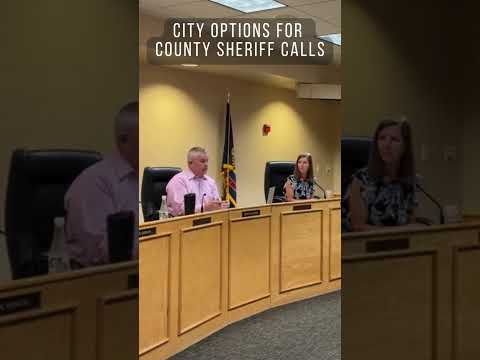
Committee member questions city payments for county patrols; chair says growth should 'pay for itself'
Summary
Participants debated whether cities can be required to pay for county sheriff patrols through MOUs and whether charges should apply to patrol-initiated contacts or only to calls for service; no motion or vote took place and participants said the MOU language must be worked out.
A committee member asked whether the county would distinguish between patrol-initiated police contacts and calls for service from cities, and whether it is legal to require cities to enter memoranda of understanding that obligate them to pay for services beyond what they already pay in county taxes. The committee member asked, “Are we going to differentiate between patrol initiated calls and calls for service from the cities?” and said, “I don't think it's legal for us to demand or force, cities into MOUs that require them to pay for services, outside of what they're paying for.”
The chair responded that the guiding principle for the proposal is that growth should “pay for itself,” and that no city would be forced into an agreement against its will. The chair said, “the idea is to wanna make growth pay for itself,” and added that a city seeking expansion or an area of impact should demonstrate capacity to pay for public safety services that exceed what county taxes already provide. The chair illustrated the distinction by saying that paying $100 in county taxes does not entitle a city to request $100,000 in direct services.
When the committee member pressed whether payments would be restricted to incidents that are citizen-initiated rather than proactive patrols, the chair said those specifics can be written into an MOU, asking whether the parties want to limit compensation to citizen-initiated events and exclude proactive policing. The committee member raised a cross-jurisdictional example: if “a driver's coming from Spokane … and the officer initiates” a stop, why would the city be responsible for that call for service? The chair said hypotheticals like that can be addressed in the MOU and reiterated that, because the expense is incurred in patrol, any revenue generated would flow back into patrol.
The committee member also noted that arrests can have downstream costs in the jail; the chair acknowledged that point and described the decision process as a board deliberation, saying the members must flesh out the proposal and that agreement will depend on enough members supporting specific language. The exchange ended without a motion or vote, with the chair saying the proposal “needs to be flushed out.”
No statutes, ordinance numbers, or dollar amounts were provided during the exchange; participants said the MOU language and scope (patrol-initiated vs. calls for service, and whether funds cover patrol only or broader sheriff's office costs) still need definition.