Get Full Government Meeting Transcripts, Videos, & Alerts Forever!
Get email alerts on the Public Health topic
No spam. Unsubscribe anytime.
Hamilton’s health department wins national accreditation; officials warn of local Legionella positives and outline shelter workload
Summary
Hamilton Township’s Division of Health earned national accreditation and reported expanded outreach and a mobile clinic. Health officers also described ongoing Legionella positives at a local facility and a recent positive in an external water intake, while the animal shelter reported a 96.4% live-release rate and increased volunteer support.
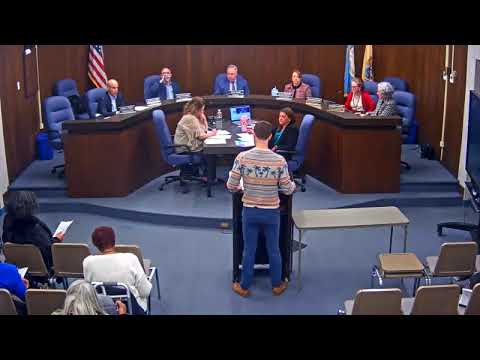
Kathy Fitzgerald, director of the Hamilton Township Division of Health, opened the board’s report and introduced staff presenting updates on accreditation, community programs and shelter operations.
Veronica DeSisto, the division’s health educator, said the department became a nationally accredited health department in August 2025 and that the status will last five years. “This achievement reflects our ongoing commitment to excellence,” DeSisto said, and she credited outreach events for delivering 1,384 flu vaccines and 115 COVID-19 vaccines this season, including a large partnership with Quaker Bridge Pharmacy.
Health officer Chris Helwig told the board he is tracking respiratory-virus season locally and urged residents to get vaccinated, test when sick and stay home when ill. Helwig also briefed the board on a Legionella situation at a local health-care facility. He said the facility has continued to record positive Legionella samples in routine tests and that the department recently detected a “raw intake” positive in the external water main feeding a building, calling that finding “a pretty alarming high level test positive recently.” He described water quality variables—chlorine residual, temperature and stagnation—as relevant to bacterial growth and noted Trenton Water Works has faced operational notices from regulators.
On animal-shelter operations, Helwig reported that roughly 495 animals entered the shelter through Nov. 30 with about 450 outcomes and a live-release rate of 96.4%. The shelter’s census included about 41 dogs and 59 cats; volunteer contributions totaled nearly 4,000 hours through November, which the department valued at roughly $137,000 in in-kind support. The board and staff discussed volunteer training, a classification system for dogs (green/blue/yellow/red) and plans to expand skills-based volunteer classes.
What happens next: the board will continue to monitor Legionella testing with the state health department and the affected facility; residents were urged to report water-quality notifications and to seek care for respiratory illness as needed. The health department will maintain accreditation activities and continue outreach using its mobile clinic.