Get Full Government Meeting Transcripts, Videos, & Alerts Forever!
Get email alerts on the Urban Greening topic
No spam. Unsubscribe anytime.
Council sends proposed boulevard‑planting height limits back to staff after public and expert pushback
Summary
After extended public comment from residents and UWSP researchers defending taller native plantings for pollinators, the council voted unanimously to return the draft right‑of‑way planting ordinance to staff for revisions to reconcile sight‑triangle safety with ecological goals.
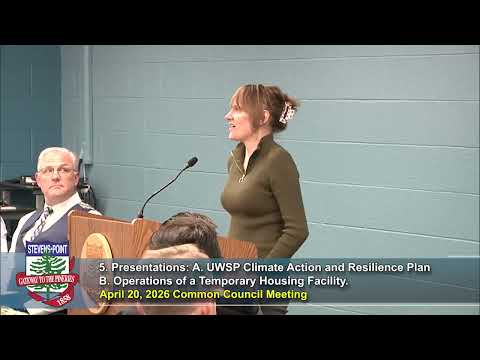
Stevens Point councilors sent a proposed update to right‑of‑way and boulevard planting rules back to staff April 20 following extensive public comment and technical discussion about appropriate height limits for plantings near streets and intersections.
The draft ordinance would set general maximum peak heights in boulevard plantings and create lower maximums near intersections, driveways and fire hydrants to protect sight lines and emergency access. That compromise prompted numerous residents, landscapers and UW‒Stevens Point researchers to urge more permissive heights (40–48 inches) for native prairie and pollinator plantings, arguing taller species provide deeper roots, better erosion control and higher value for pollinators and wildlife.
‘‘I think it possibly, but doubtful, that native plantings up to 48 inches would cause significant safety issues,’’ Mary McComb said, urging staff to retain the 48‑inch recommendation produced in earlier staff fact‑finding. Andrea Olsen, who helped draft the earlier Lawn’s Gone Native guidance, said long‑standing outreach and research projects would be disrupted by lower height limits and asked the council to grandfather or avoid forcing established plantings to be removed.
Staff and several council members said safety—drivers’ ability to see over a three‑foot planting when pulling into a street—was a key factor. Director Badoon recommended additional time to coordinate metrics and to align the draft with existing vision‑triangle rules and other ordinances.
After debate, council voted unanimously to send the draft back to staff for refinement and to harmonize the new rules with existing vision‑triangle language and enforcement practice. Staff will return with a revised proposal that reconciles sight‑triangle safety, fire‑hydrant clearances and the city’s ecological goals for pollinators.
Next steps: staff will gather submitted comments, reconcile the proposed height limits with the city’s existing vision‑triangle code and return with a revised ordinance for future council consideration.