Get Full Government Meeting Transcripts, Videos, & Alerts Forever!
Get email alerts on the Rules Of Procedure topic
No spam. Unsubscribe anytime.
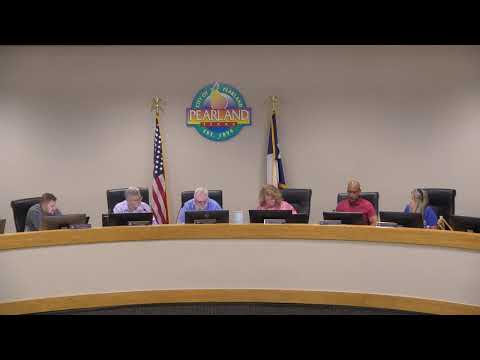
Pearland planning commission reviews redlined rules of procedure with changes to vacancies, votes and meeting times
Summary
The Pearland Planning and Zoning Commission reviewed a redline of its rules of procedure on July 6, 2026, debating language that would require quicker filling of vacancies, introduce roll-call voting and move meetings to 6 p.m.; staff will revise the draft and return it to the commission and then to city council for approval.
The Pearland Planning and Zoning Commission on July 6 reviewed a redlined draft of its rules of procedure that would add conditional use permits to the commission's duties, set timelines for filling vacancies, change voting procedures and shift the regular meeting start time to 6 p.m.
Staff presented the proposed edits and summarized the major changes, saying the redline fixed spelling and formatting, "we added conditional use permits to powers and duties to the planning and zoning commission," and proposed updating vacancy timelines and voting procedures. The staff member also said the redline aligns the rules "with state law as well as current procedures that we are currently enacting today." (Staff member)
Commissioners pressed staff on several specifics. Multiple members said a fixed 30-day requirement to fill commission vacancies may be impractical; one asked that the language be changed to "in compliance with state law" or "as soon as practical" to allow for logistical realities of appointments. A staff advisor suggested flexible wording to account for statutory timing and posting requirements. (Commissioners, staff)
The draft also proposes moving from anonymous hand votes to a roll-call format for all items. Commissioners raised trade-offs: some said roll-call votes improve transparency, while others warned that calling each name for every routine vote would lengthen meetings. Staff and counsel noted that any rules the commission adopts will go to city council for final approval and suggested the commission could use a "record vote" option to balance public record needs and efficiency. (Commissioners, staff member)
Members additionally questioned consolidated language that would have the mayor or the mayor's designee "conduct" joint public hearings, workshops or special meetings, noting some workshops are commission-only and do not involve the mayor. Staff agreed to separate or clarify those sections to avoid incorrectly assigning mayoral duties to commission-only meetings.
On implementation timing for a 6 p.m. start time, staff proposed October or November, emphasizing the need to update the website and notify applicants if council approves the change. Commissioners requested sufficient lead time and suggested November could better align with appointment cycles.
Staff said it would incorporate the requested edits (vacancy timing, roll-call language, formatting and ordinance citations) and return a revised draft to the commission for final consideration and then to city council for adoption.
The commission did not take a final vote on the rules at the July 6 meeting; staff plans to bring a revised redline back at a future meeting.