Get Full Government Meeting Transcripts, Videos, & Alerts Forever!
Get email alerts on the Wind Energy Ordinance topic
No spam. Unsubscribe anytime.
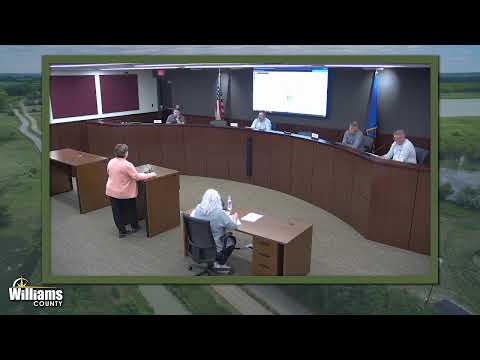
Williams County commissioners adopt one-mile wind-turbine setback, add definition for 'seasonally occupied'
Summary
After extended public comment and internal debate over property rights and ambiguous language, the Williams County Board of County Commissioners approved changing its wind-energy setback to one mile from occupied and seasonally occupied farmsteads and homes and adopted a definition of 'seasonally occupied.'
The Williams County Board of County Commissioners on July 7 approved an amendment to the county zoning ordinance that sets wind-turbine setbacks at one mile from occupied and seasonally occupied farmsteads and homes, after public testimony and a contested board discussion.
Why it matters: The one-mile setback (5,280 feet) is a significant increase from the currently cited 1,400-foot standard and, according to speakers at the meeting, substantially expands the area around any proposed turbine locations that would be off-limits without written waivers. Supporters said the change protects neighbors who do not want turbines nearby; opponents said it risks killing future projects and raising property-rights and litigation concerns.
Public speakers were sharply divided. John McMaster, a lifetime Williams County resident and retired attorney, said the increase from 1,400 feet to one mile represents a roughly 377% increase and warned it would “effectively kill any further wind power projects in Williams County.” He also criticized the draft language for using the term “unoccupied farmsteads and homes,” saying it could be applied too broadly and place an onerous due‑diligence burden on applicants. “I think you need more information,” McMaster told the board and submitted reports for the record.
Several speakers backed the change. James Horeb said a one-mile setback “keeps neighbors more neighborly,” arguing it reduces conflict between participating and nonparticipating landowners. Another resident, Kurt Andrew, said he worried about property-rights impacts and lost revenue for landowners located within a one-mile radius of residences.
Board debate centered on the meaning of terms and the scale of impact. One commissioner moved to deny the change, citing ambiguity about the term “unoccupied structure” and noting the difference in protected acreage the board would create (transcript discussion cited roughly 141 acres removed under a 1,400-foot setback versus about 2,010 acres under a one-mile radius). That denial motion failed on roll call. Commissioners then debated whether to send the item back to the committee for a clearer definition or amend the language on the floor.
The board ultimately voted to approve the amendment with modified language specifying setbacks from “occupied and seasonally occupied farmsteads and homes” and directed the ordinance be amended to include a definition of “seasonally occupied.” A subsequent motion to adopt the following definition passed: “A permanent structure designed and intended for human habitation that is occupied on intermittent periods during the year, which possesses active and connected utilities, electricity, and an approved water sanitation system, is assessed as a residential structure for property tax purposes, and is maintained in a safely habitable condition.”
Commissioners and staff noted that variances remain possible: the ordinance continues to allow a variance process, including a waiver agreement between a permittee and an affected landowner. During the meeting staff and several commissioners acknowledged existing definitions in the code for permanent and temporary occupancy but said “seasonal” was not previously defined and that adding a clear definition should reduce ambiguity and possible litigation.
What’s next: The ordinance change and the adopted definition were approved by roll call at the meeting; the board did not send the item back to committee. The new language will be incorporated into the Williams County zoning ordinance and apply to future wind-turbine permits. The record includes public exhibits submitted during the hearing and staff notes on committee deliberations.
Quotes: “This change will effectively kill any further wind power projects in Williams County,” said John McMaster, identifying himself as a lifetime resident and retired attorney. “I think you need more information,” he added. “This one-mile setback keeps neighbors more neighborly,” said James Horeb in support of the amendment.
Votes and formal actions: The board considered and voted on a motion to deny the proposed ordinance change (the motion failed). The board then approved the ordinance amendment with the amended language specifying setbacks from occupied and seasonally occupied farmsteads and homes and separately adopted a definition for “seasonally occupied.”