Get Full Government Meeting Transcripts, Videos, & Alerts Forever!
Get email alerts on the Attainable Housing topic
No spam. Unsubscribe anytime.
Council weighs attainable-housing, land-trust and limited commercial options for 450 East parcels
Summary
City staff outlined three paths for city-owned lots on 450 East — sell at market, sell with deed restrictions to keep prices down, or pursue a community land trust with WACOG — and the council directed staff to explore deed restrictions, an RFP process and WACOG coordination; residents raised safety, notice and property-value concerns.
City manager John Call and planning staff briefed the North Ogden City Council on options for a string of city-owned parcels along 450 East that were acquired for a road‑widening project.
Staff framed three primary approaches: (1) reconfigure lot lines so properties comply with R‑1‑8 zoning and sell on the open market; (2) sell or subdivide but impose deed restrictions or physical design controls (smaller footprints, larger setbacks, single-story limits) to keep homes smaller and more affordable; or (3) partner with a community land trust (or similar model) so the land remains publicly or trust-owned while the structure is sold to an income‑qualified owner under a long lease. Staff said a land‑trust approach could remove roughly $150,000–$200,000 in land value from a purchase price — for example turning what might be a $500,000 house into a $350,000 attainable home — but warned that administering a small land‑trust program can create overhead and that the city would likely need WACOG or a regional partner for scale.
Staff also noted financial constraints tied to WACOG: project proceeds and rent collected from the acquired parcels have been applied to the road project match, and the existing agreement requires proceeds to stay with the transportation project unless WACOG agrees otherwise. Call said the current agreement means the city would not necessarily receive excess sale proceeds and that staff should loop WACOG into any plan that changes market value.
Councilors probed eligibility ideas — reserving units for first responders, teachers or municipal employees — and heard from staff that deed restrictions and land‑trust leases can be structured to require resale to buyers who meet income or occupation criteria. Council members also discussed rezoning a corner lot for neighborhood‑scale commercial uses (insurance agent, small office, strip retail) while keeping the rest single‑family; they stressed careful buffering, building-size limits and design controls to protect neighbors’ views.
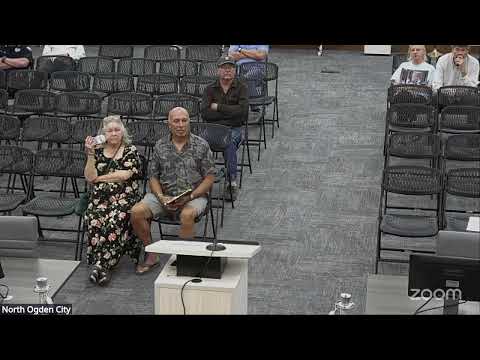
Several nearby residents and public commenters urged clarity and protections for neighbors: Kelly Carmichael and Gary Stewart said notices arrived only days earlier and asked whether the city would protect nearby homeowners’ views, provide sidewalks and address traffic safety. Staff said the road‑widening project will include curb, gutter and sidewalk improvements on the west side and that staff would follow up on specific property questions and the statutory sale process. Later in the meeting staff reminded council of a recent legal change requiring cities to list surplus properties at market for 45 days before sale unless a statutory exception applies.
After extensive discussion, council asked staff to explore deed‑restriction options, investigate land‑trust feasibility and coordinate with WACOG, and to prepare an RFP/RFQ so commercial and residential proposals can be evaluated together. No formal land sale, rezoning or commitment was approved the night of the meeting.