Get Full Government Meeting Transcripts, Videos, & Alerts Forever!
Get email alerts on the Water Sanitation topic
No spam. Unsubscribe anytime.
U.N. panel at HLPF urges private investment and youth, women engagement to speed SDG 6 progress
Summary
U.N. officials and civil‑society leaders at a High‑level Political Forum media event said progress on SDG 6 (water and sanitation) is real but too slow, urging private capital, youth and women’s leadership and action‑oriented outcomes ahead of the 2026 U.N. Water Conference.
Stephanie Rambler, a senior sustainable development officer at the United Nations Department of Economic and Social Affairs, opened a media session at the High‑level Political Forum in New York on the state of SDG 6 and introduced three experts who urged faster action and new forms of engagement.
Retno Marsudi, the U.N. secretary‑general’s special envoy on water, said the newly launched U.N.‑Water synthesis report shows progress on drinking water and sanitation but cautioned that the pace is inadequate. “Access to water and sanitation makes almost everything in our life possible,” Marsudi said, adding that accelerating progress will require cooperation across governments, civil society and the private sector.
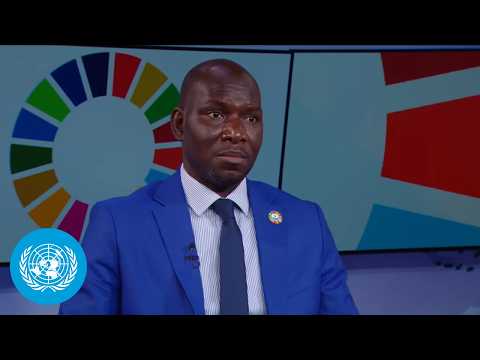
Mohammed Diatta, sherpa for the 2026 U.N. Water Conference for the government of Senegal, said mobilizing youth and women is central to the conference strategy and warned that financing and capacity remain constraints. Diatta cited an estimated investment gap in Africa of about 30,000,000,000 to close infrastructure and service shortfalls and emphasized that countries also need project‑management capacity to absorb funds.
Agnes Fritz, CEO of Viva Con Agua Germany, described the organization’s Pass the Water campaign, which uses sports, music and art to teach hygiene and raise public awareness. “We pass the water,” she said, describing simple, scalable actions—images, short games and public activations—that can engage people who do not normally follow water policy debates.
Panelists stressed that the 2026 U.N. Water Conference, to be co‑hosted by Senegal and the United Arab Emirates in Abu Dhabi, should be action‑oriented. The panel cited finance data discussed during preparatory meetings indicating that roughly 86% of water financing currently comes from public sources and a very small share—about 2%—from private sector investment, a mix they said must change to accelerate SDG 6 outcomes.
The session concluded with calls for concrete flagship initiatives, stronger multistakeholder partnerships, and targeted efforts to bring young people and women into water governance. Panelists said private capital, foundations and new delivery partnerships will be necessary to translate commitments into implemented projects ahead of and after the 2026 conference.