Get Full Government Meeting Transcripts, Videos, & Alerts Forever!
Get email alerts on the Open Burning Ordinance topic
No spam. Unsubscribe anytime.
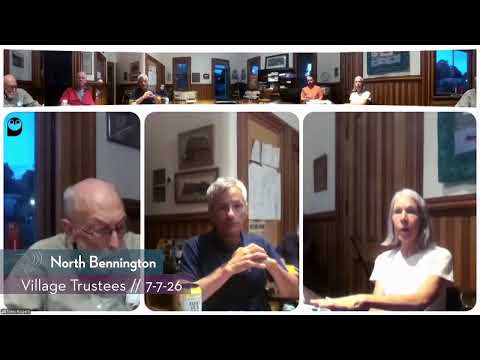
North Bennington trustees unanimously adopt stricter open-burning ordinance
Summary
The trustees adopted a revised open-burning ordinance that names the municipal fire warden under Act 162, clarifies enforcement and requires a pressurized water source and hose at all permitted burns; adoption was unanimous.
The North Bennington Trustees voted unanimously July 7 to adopt a revised open-burning ordinance that, among other changes, explicitly designates the municipal fire warden under Act 162 and requires that permitted open burns have a pressurized water source and hose on site.
The ordinance presented by the planning commission (version 5) incorporated edits requested by the fire chief, including clearer enforcement language and a new rule that a pressurized water source and hose be available at any permitted burn to ensure immediate extinguishing capability. Presenter (planning commission representative) said the changes followed consultation with the fire department.
The chair said the planning commission recommended adoption. Trustee (speaker labeled S7) moved to adopt the ordinance and Trustee (speaker labeled S5) seconded; after no public comment, the chair called the question and the trustees voted aye, making the adoption unanimous.
Why it matters: the change shifts formal authority and responsibility to local fire officials under Act 162 and adds a practical safety requirement intended to reduce fire risk from permitted open burns. The ordinance still requires later administrative work (forms, fees and procedures) before enforcement and permitting begins.
The trustees said the transfer of permitting mechanics and any site-specific controls (for example, who issues permits and how fees are set) will be worked out after adoption, with the fire chief involved in setting forms, fees and operational rules. The planning commission will follow up on implementation details during the public review period.