Get Full Government Meeting Transcripts, Videos, & Alerts Forever!
Get email alerts on the Watershed Master Plan topic
No spam. Unsubscribe anytime.
Committee adopts watershed master plan after consultant shows flood projections
Summary
The North Charleston Public Safety Committee adopted a watershed master plan after a consultant presented flood‑mapping and NOAA projections that identify six priority areas and recommend strengthened interdepartmental coordination and targeted engineering studies.
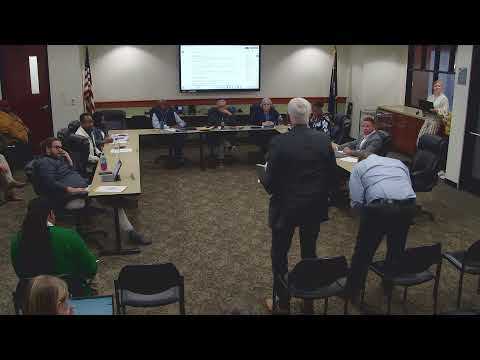
The North Charleston Public Safety Committee on March 19, 2006 approved a resolution to adopt a watershed master plan following a presentation by Wolpert Associates addressing future flood risks and Community Rating System benefits.
The plan, funded in large part by a grant from the Rural Infrastructure Authority, was prepared to help the city earn Community Rating System points that can lower flood insurance rates for residents. "The more points the city gets, the lower the, insurance rates are for people in the community," consultant Crystal Muller said during her presentation.
Muller described the project’s technical approach: a two‑dimensional model to map where rainfall runs overland and through pipes, cross‑checked against historical flooding complaints including the 2015 flood. She said the model aligned with recorded complaints and highlighted six areas where projected flooding would affect homes and businesses rather than marshland. Muller also reviewed NOAA high‑end sea‑level projections—about 1.8 feet by 2060 and about 5.1 feet by 2100—and explained that faster, more intense rainfall contributes to inland flooding.
The plan’s recommendations focus on supporting capital improvement projects and pursuing targeted engineering studies in the six identified areas. Muller urged better coordination among planning and zoning, floodplain management, stormwater and public works and suggested the city continue to enforce — and consider strengthening — development restrictions in floodplains and wetlands. "You wanna continue to enforce your regulations," she said, adding that public outreach is important because some long‑time homeowners may not carry flood insurance.
Committee members thanked the consultant and, following motion and second recorded before the presentation, approved the resolution to adopt the watershed master plan. The resolution was introduced as "Resolution No. 4" during the public‑safety agenda and moved for approval prior to the presentation.
The committee did not specify a detailed implementation schedule during the meeting; the consultant noted the watershed master plan is a large‑scale document meant to guide subsequent, more detailed engineering studies and capital investment decisions.