Get Full Government Meeting Transcripts, Videos, & Alerts Forever!
Get email alerts on the Open Air Vending topic
No spam. Unsubscribe anytime.
Princess Anne holds first reading of open-air vendor and food-truck ordinance; commissioners schedule further review
Summary
Commissioners heard a lengthy first reading of a draft ordinance to license and regulate open-air vendors and food trucks, including site, safety and commissary requirements; board members asked how nonprofits and educational booths would be treated and agreed to take the ordinance to a July 20 work session for further review.
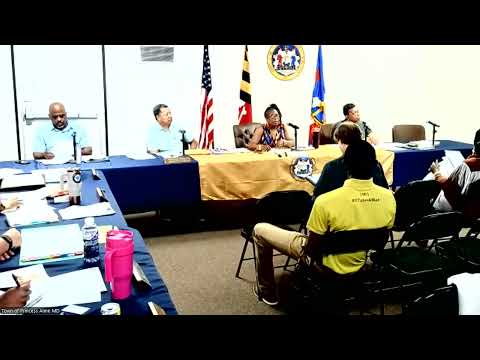
On July 6, 2026, the Town Commissioners of Princess Anne conducted the first reading of a comprehensive ordinance to regulate open-air vendors and food trucks, laying out licensing, operational, health and enforcement standards.
The draft ordinance—read aloud by the Town Clerk—adds definitions, requires a vendor license, sets application and commissary documentation standards for regulated food vendors, establishes site and display limits (maximum vendor footprint of 10 by 25 feet), requires trash and site-restoration responsibilities, authorizes inspections, and sets a fee framework that the board would adopt later by resolution. The draft also contains penalties for violations and a severability clause.
Code enforcement staff framed the proposal as balancing public safety and support for community events. “The goal is not to discourage vendors, but to create a program that is organized, predictable, and beneficial to everyone involved,” the Code Enforcement Officer told commissioners during the presentation. The draft includes a 250-foot separation standard for mobile food vendors from brick-and-mortar food establishments (waivable for large special events), commissary and health-department documentation requirements for food preparation, and a reciprocity provision for vendors holding valid permits from other Maryland jurisdictions.
Commissioners queried how the ordinance would treat nonprofits or organizations that come to town to provide information or services without selling goods. Commissioner Dale Parker pressed whether those groups would be charged fees; code enforcement staff and the clerk explained fee levels would be set by subsequent board resolution and that the ordinance’s definition of “vendor” is tied to selling or offering for sale, which may make non‑selling outreach entities functionally distinct from fee‑paying vendors.
The ordinance reading was recorded as the first reading; commissioners agreed to move the item to the July 20 work session for substantive review and scheduling of a final vote. Staff said they had drafted the application materials, inspection checklists and enforcement procedures and would provide those materials in advance of the work session.
Next steps: the board will review fee schedules and the draft language at the July 20 work session and schedule the ordinance for a final vote at a subsequent legislative session.