Get Full Government Meeting Transcripts, Videos, & Alerts Forever!
Get email alerts on the Climate Nonprofits topic
No spam. Unsubscribe anytime.
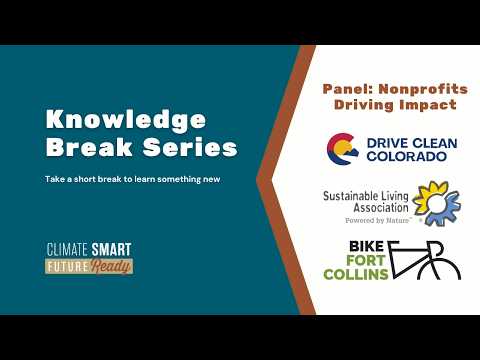
Nonprofit panel: Larimer County’s Climate Smart Future Ready relies on nonprofits for outreach, funding and implementation
Summary
Larimer County sustainability coordinator Abby Stapleton moderated a panel where nonprofit leaders said their organizations provide trusted community engagement, access to funding and flexible operations that help implement Climate Smart Future Ready across the region.
Abby Stapleton, Larimer County sustainability coordinator, opened the July knowledge break by describing Climate Smart Future Ready as a county‑convened, two‑year program launched in 2024 that coordinates about 18 action teams across Larimer County to address topics from circular economy to electric vehicles.
"We are not the, kind of sanctioning this program. We're just kind of collaborating and convening with community partners on this program," Stapleton said, noting the county’s role is to align priorities and reduce duplicated effort. She also cited a Colorado State University MBA cost‑benefit analysis that found a minimum $2.50 return for every $1 invested and as much as $7.50 per dollar when accounting for time and grant dollars.
Panelists described how nonprofits bring specialized capabilities needed to move regional climate solutions from planning to action. Mike Moses, executive director of Bikers College, said nonprofits can implement programs such as Safe Routes to School, donate refurbished bikes and deliver youth cycling instruction, giving concrete mobility options to families.
"If you have a bike, you can get to work, you can get to school," Moses said, describing Safe Routes work that teaches thousands of students and donates bikes to Title I schools.
Kelly Falo, executive director of the Sustainable Living Association, called nonprofits trusted conveners that translate big goals into community action through education, leadership development and partnerships with schools, businesses and local government.
"Our role is to help people move from learning about sustainability to actually creating change," Falo said, adding the organization runs long‑standing programs such as Earth Day Fort Collins and youth climate leadership series.
Bonnie Trowbridge, executive director of Drive Clean Colorado, focused on clean‑transportation work with fleets and on equitable adoption. She said Drive Clean connects communities to technical resources, federal and state funding, and implementation support.
"We can get that done so they can get that funding," Trowbridge said, describing the nonprofit’s role in helping operators access grants and transition to cleaner vehicles.
Speakers also discussed challenges: funding instability, the need to measure success beyond emissions and the importance of centering equity and access. Falo said the organizations rely on a mix of grants, sponsorships and donors; she cited a lost $96,000 federal grant for Weld County expansion that local donors and foundations helped replace to continue programming.
Panelists proposed broader success metrics that include access to services, youth leadership and whether historically excluded communities benefit from climate initiatives. Moses highlighted mobility metrics tied to ADA compliance and the ability for vulnerable residents to reach essentials without a car as an indicator of successful transportation systems.
The panel emphasized that nonprofits’ trust, flexibility and community relationships make them essential partners for Larimer County’s program and for making climate solutions tangible at the neighborhood level. Stapleton closed by directing attendees to a story map and the program website for further details and set up a Q&A with Desiree Moore to run the recording.