Get Full Government Meeting Transcripts, Videos, & Alerts Forever!
Get email alerts on the Municipal Budget topic
No spam. Unsubscribe anytime.
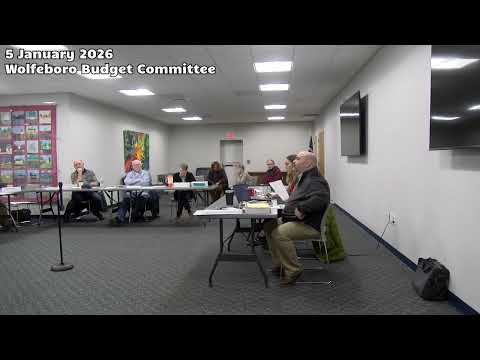
Wolfeboro Budget Committee reviews proposed $35.7 million budget, flags insurance and tax impacts
Summary
The Wolfeboro Budget Committee reviewed a proposed $35.73 million town budget with a 6.19% overall increase and discussed a roughly 6.99% tax impact tied to the general fund; members asked for clearer presentation slides on uncontrollable drivers such as insurance, debt service and enterprise funds.
The Wolfeboro Budget Committee on July 5 reviewed a staff summary of the 2026 proposed budget, which totals $35,731,379 — an increase of about $2.08 million, or 6.19% over the baseline the committee is using.
Jim, who presented the summary, said the general fund proposal is $20,397,159 (an increase of $1,332,892, or 6.9%); the water fund is proposed at $1,815,112 (up $192,367, or 11.85%, paid by ratepayers); the electric fund is $10,977,262 (up $225,382 or 2.1%); and the sewer fund is $1,991,869 (up $193,959 or about 10.79%). "Total budget proposed, $35,731,379," Jim said as he walked the committee through the figures.
Committee members pressed for clarity on the tax-rate effect of those numbers. Jim confirmed that the tax-impact figure being discussed for the general fund is approximately 6.99%.
Members repeatedly asked for clearer public-facing materials that separate the general-fund tax burden from enterprise funds and other revenues. Member - S4 suggested a single slide showing items the committee cannot control — union contracts, insurance and debt service — so voters can see what portions of the budget are constrained. "We need to have one slide or one graph that shows stuff that we have no control over," the chair added.
Insurance costs were flagged as a major driver. Member - S5 noted an insurance increase of roughly 24.9% and called it "a big number in our budget," pressing that the presentation explicitly explain how insurance and other non-controllable costs affect the bottom line.
The committee discussed the proper baseline for public materials. Jim recommended using the 2025 default budget (the budget voters approved when the proposed budget failed) as the reference point in the town report and related pie charts for the public hearing. Member - S5 offered to share Department of Revenue Administration (DRA) comparison metrics that rank towns by effective tax burden; he suggested those could help explain Wolfeboro's relative position.
On operational details, Jim said personnel administration reflects substantial benefits costs (health insurance and other coverages) and confirmed the committee's earlier cuts to that line (about $25,904) will be shown on an updated sheet. He also said some recent repair costs, such as a chiller repair, were partly covered under warranty and thus were not expected to materially change the department's ongoing budget baseline.
The committee assigned portions of the public presentation to members — parks and recreation, fire, police, library, highway, water and sewer/public works, electric and general government — and asked Jim to prepare concise slides and a packet attendees can take away that highlights the budget drivers, revenue sources beyond property tax, and where enterprise funds do or do not affect the tax rate.
The committee set follow-up work for Thursday and asked staff to produce updated charts and a draft town report that explains the role of the default budget in the current numbers. The meeting did not include new formal votes on the budget itself; members agreed to continue deliberations and to aim, where possible, for a unanimous recommendation.