Get Full Government Meeting Transcripts, Videos, & Alerts Forever!
Get email alerts on the Zoning Data Centers topic
No spam. Unsubscribe anytime.
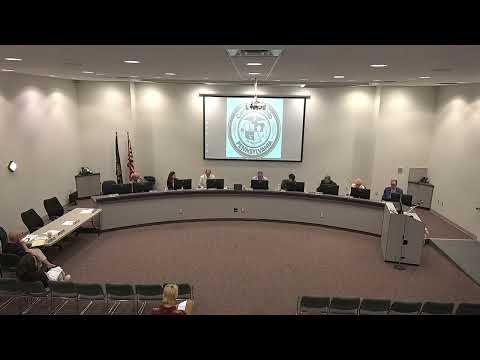
Cecil Township holds data-center workshop, directs staff to draft ordinance for August
Summary
At a July 4 workshop the Cecil Township Board of Supervisors asked staff to prepare a proposed data-center ordinance or curative amendment for the August meeting after residents raised concerns about setbacks, water use, noise and possible state tax incentives.
Cecil Township held a July 4 workshop to gather public input on drafting a new ordinance to govern data centers, from small retrofit facilities to large “hyperscale” operations, and directed staff to bring a draft or curative amendment to the board in August.
Gretchen Moore, the township solicitor, opened the session and framed it as a brainstorming workshop, saying the township has been drafting ordinance language using model provisions but has not yet advertised any formal ordinance. “Tonight is more like a brainstorming session,” Moore said, adding the next formal step would be advertising an ordinance and holding a hearing.
Board members and residents spent much of the meeting debating where data centers would be allowed and what limits are appropriate. Moore described two general types: smaller centers that can be retrofitted into existing office or industrial buildings and large hyperscale campuses that require significant land and utilities. She noted the board could create a new zone, an overlay district or rely on existing industrial zoning, but cautioned that some industrial districts in Cecil are adjacent to residential villages.
One board member raised safety and environmental concerns and said a 500-foot setback under initial consideration “would not be quite enough,” citing potential noise, air and water issues. Another member suggested a 2,500-foot setback with a waiver option, analogous to setbacks used for oil-and-gas operations in other decisions. The board discussed the technical reality that some large centers use closed-loop cooling systems that recycle water and release steam, while others may seek access to river water or major electrical infrastructure.
Residents pressed the board on legal obligations and local benefits. Lee Sahene, a resident, asked whether state law requires municipalities specifically to set aside space for data centers; Moore replied that state zoning law requires the township to provide zones for broad use types (residential, commercial, industrial) but does not obligate the township to make room tailored to hyperscale projects. “We don’t have to meet their need,” Moore said, describing how catch-all provisions and Zoning Hearing Board processes can allow an applicant to seek relief if a use is not explicitly listed.
Citizens also questioned whether promised economic benefits—including reports of state-level incentives such as a sales-tax exemption for servers—would materialize at the local level. Several speakers urged caution about changing township character for uncertain returns.
By the meeting’s end a board member proposed and the chair agreed that staff should prepare a substantial draft ordinance or curative amendment for the board to review in August so residents can read and comment; no formal vote was recorded at the workshop. The chair adjourned the workshop after the direction was given.
The board’s next procedural step is to receive the draft ordinance or curative amendment in August and then decide whether to advertise a hearing and formally consider adoption.