Get Full Government Meeting Transcripts, Videos, & Alerts Forever!
Get email alerts on the Indoor Facility topic
No spam. Unsubscribe anytime.
Mike Bathke outlines $8M‑$9.5M multipurpose indoor sports facility proposal for Mitchell
Summary
Volunteer project lead Mike Bathke presented two development options — a ~40,000 sq ft enclosed building and a larger hybrid with an inflatable ‘bubble’ that would expand usable turf — and asked the Mitchell Sports and Events Authority to pursue site selection, city partnership and fundraising. No funding vote was taken.
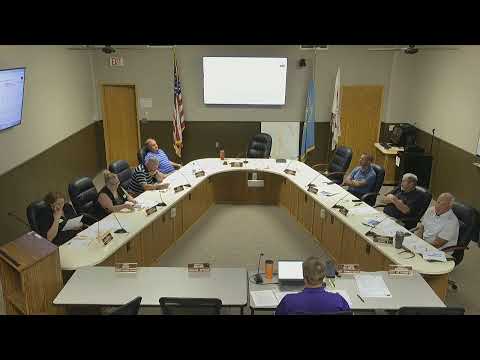
Volunteer Mike Bathke told the Mitchell Sports and Events Authority on Monday that a regional, multipurpose indoor sports facility could provide winter practice space, small tournaments and expanded recreational options while helping fill motel rooms in shoulder seasons.
Bathke presented two concept options prepared with Palace Builders and designer Nick Coomer. Option A is a fully enclosed pre‑engineered metal building of roughly 40,000 square feet aimed at practice use and small events; Option B pairs a smaller metal structure with an inflatable “bubble” that would add roughly 60,000 square feet of turf area (bringing total covered space to about 90,000 square feet) at lower hard‑cost per square foot. Bathke said the full enclosed building is roughly an $8 million project, while variations that add turf or more amenities push toward $8–9.5 million; the bubble structure itself was estimated at about $1.4 million with HVAC/air‑handling costs an additional $500,000–$600,000 in Bathke’s materials.
Why it matters: the board’s Sports and Events Authority uses hotel‑related revenues to fund promotions and board projects. Proponents argued a regional facility could increase room nights and local spending in slow months; skeptics cautioned the board to be realistic about operating costs, debt service and whether a facility of the proposed scale would reliably generate enough out‑of‑town visitors to justify public investment.
Board members and community representatives pressed several operational and governance questions. Bathke proposed a model where the city might build the asset and lease it to a nonprofit operator, or the nonprofit could own and run the facility directly. He cited examples where privately owned indoor sports centers cover concessions and ticket revenue but carry heavy debt loads; in those examples owners sometimes worked long shifts themselves before the business could support paid staff. Bathke said he favors low ongoing staffing (a manager and part‑time janitorial support) and highlighted revenue opportunities from spectator fees, concessions and naming rights.
Local sports stakeholders weighed in. Pam Baffney, who said she had worked with multiple sports associations locally, told the board that existing teams typically adapt gymnasium space for winter use and that smaller, divisible fields allow multiple games and spectator placement. Bathke read a note from area soccer organizer Scott Mullenmeister saying a venue like Brookings’ facility could host large youth tournaments for younger ages and smaller tournaments for older age groups.
Concerns included durability and utility of a bubble structure (storms, air handling and condensation), scheduling among user groups, and the ability of any single organization to sustain operations. Board members recommended additional site analysis and a series of facility visits so decision‑makers can compare costs, ceiling height and sightlines. Bathke asked the board to consider committing to further study and to help arrange site visits; he said he was not asking for funding at the meeting but hoped the board would engage on next steps.
No formal motion or funding commitment was taken. Bathke requested the board and city council liaisons gauge whether the council and motel owners would support city involvement or other financing mechanisms — including a potential voter‑approved 1¢ sales tax option that would require a public vote — before the SCA would consider a funding pledge. The board agreed to continue discussion, gather more detailed cost figures from the designer and arrange site visits.
Next steps: Bathke will work with the designer and staff to provide firmer site cost estimates and coordinate facility site visits for board members; the board did not set a timeline for deciding whether to allocate bid board funds toward the project.