Get Full Government Meeting Transcripts, Videos, & Alerts Forever!
Get email alerts on the Land Use topic
No spam. Unsubscribe anytime.
Zoning board deadlocks on Chipotle building-height variance in Bowling Green
Summary
At its July 2026 meeting the Bowling Green Zoning Board of Appeals split 3-3 and declined to grant a variance that would have allowed a proposed Chipotle at 1187 South Main Street to be 18 feet 8 inches tall, below the 25-foot minimum in the commercial C district.
The Bowling Green Zoning Board of Appeals deadlocked 3-3 on a variance request that would have allowed a proposed Chipotle at 1187 South Main Street to have a parapet height of 18 feet 8 inches, short of the commercial C district’s 25-foot minimum.
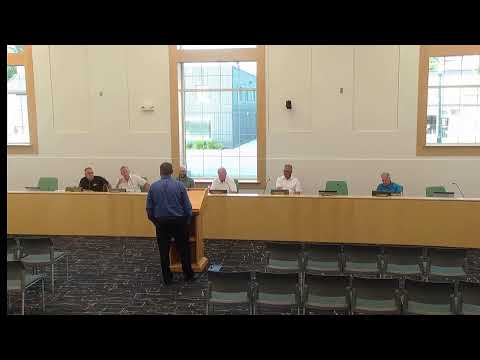
Planning staff presented the application and said the proposal is a standard Chipotle prototype about 2,400 square feet. Dan Stone, an engineer with Van Horn Hoover Associates who represented the developer, told the board the chain typically uses that prototype nationwide and that raising the building to meet the 25-foot minimum would change the company’s standard design.
“In my opinion, this is a standard prototype that Chipotle has,” Dan Stone said, explaining the requested height and the prototype’s appearance. He acknowledged construction costs would rise if the developer altered the model but said the prototype’s consistent look is a reason for the variance request.
Board members focused on whether the applicant had shown a “practical difficulty,” the legal standard for a variance. Several members said cost and corporate design preferences do not meet that standard. One member noted the developer was absent and that missing testimony made it harder for the board to find the specific, site-based hardship required by the code.
Other members said the shorter building would fit the existing roadside appearance and pointed to nearby fast-food buildings that appear similar in height. The board also debated whether granting a six-foot shortfall would create an undesirable precedent that would undermine the zoning update that established the 25-foot minimum.
A motion to approve the variance “as submitted” was moved and seconded and was decided by roll call. The vote resulted in three yes votes and three no votes; because the board did not achieve a majority the request was not approved. The chair advised the applicant of the right to appeal to the Wood County Court of Common Pleas.
The board did not set a follow-up; staff said they would relay the board’s questions and concerns to the developer and encouraged the applicant to consider providing additional evidence if the request is reheard or appealed.