Get Full Government Meeting Transcripts, Videos, & Alerts Forever!
Get email alerts on the Utility Rates topic
No spam. Unsubscribe anytime.
Utility Advisory Committee recommends 5% rate path to replenish reserves
Summary
Boulder City’s Utility Advisory Committee voted unanimously July 8 to recommend Option 2 — a 5% across-the-board rate increase through fiscal year 2029 — to City Council, citing the need to replenish a rate-stabilization reserve and ensure enterprise fund liquidity.
The Boulder City Utility Advisory Committee voted unanimously July 8 to recommend that City Council adopt Option 2 in the FCS rate study, a 5% across-the-board annual increase for the city’s electric, water, wastewater and landfill utilities through fiscal year 2029.
Committee member (S9) moved the recommendation to council, saying, “I’ll make a motion that we recommend option 2,” and a fellow committee member seconded the motion. Chair called the question and the motion passed unanimously.
City staff and the FCS consultants presented two alternatives and a set of provisions common to both: a $3,000,000 transfer from the rate-stabilization reserve to support capital needs and a $2,150,000 interfund loan from the water fund to electric (to be repaid starting in 2032). George Khan (S6) summarized the timetable and emphasized that the UAC’s action is a recommendation to the City Council rather than a final council decision.
Angie Hamrick of FCS provided an estimate of the near-term revenue impact under a 5% across-the-board approach: about $1,458,000 in additional revenue for fiscal year 2027, with roughly $925,000 from electric, $393,000 from water, $94,000 from wastewater and $46,000 from landfill. Hamrick said the draft report is scheduled to go to council on Aug. 25, with a draft to the committee shortly afterward for feedback.
Members questioned whether the revenues collected under Option 2 would be kept in individual enterprise accounts or pooled into a rate-stabilization reserve and how compounding 5% increases over multiple years would affect future revenues. Staff clarified that while each enterprise records its revenues to its own account, contributions to the rate-stabilization reserve and interfund-repayment plans would be tracked per the study’s schedule.
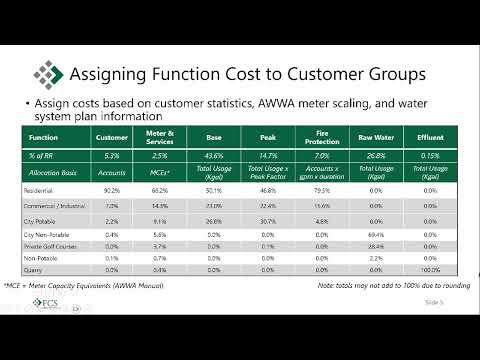
The committee’s recommendation addresses only the revenue-requirement side of the study. FCS and city staff said cost-of-service allocation and detailed rate-design changes (for example, changes to fixed monthly charges, tiering or demand charges) will be considered separately and brought back to the committee for additional review.
The committee’s recommendation will be forwarded to City Council for its consideration and possible action at the dates and deadlines outlined in the FCS timeline.