Get Full Government Meeting Transcripts, Videos, & Alerts Forever!
Get email alerts on the Public Health topic
No spam. Unsubscribe anytime.
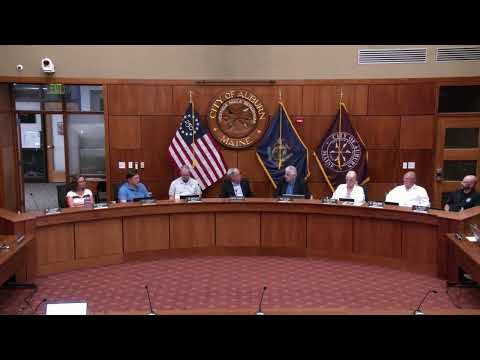
Auburn council postpones syringe-service ordinance after heated public hearing and debate over exchange rules
Summary
After hours of public testimony and a narrow council debate over exchange vs. cap-based needle distribution, the council postponed a vote on the syringe-service program ordinance and an associated fee order to allow staff to schedule expert testimony and refine exchange provisions.
Auburn’s city council on July 6 postponed a vote on a proposed ordinance to license and regulate syringe service programs (SSPs) after a lengthy public hearing and contentious council debate over whether the city should require a strict 1-for-1 syringe exchange or follow the state/CDC cap that allows up to 100 syringes per visit.
Councilor Tim Cowan moved to amend sections 4(h) and 8(f) of ordinance 1206152026 to align the city’s licensing background-check requirements with existing business-license standards and to avoid excluding people with convictions that have since been decriminalized. The council adopted that amendment by voice vote; the record shows seven members voting in the affirmative and none opposed.
Public comment was sharply divided. Opponents said SSPs would draw people struggling with substance use into Auburn, create public-safety and litter problems and strain municipal services. Kathleen Light, a resident who said she had worked with people experiencing homelessness and addiction, told the council, “Adding a needle exchange program will only worsen the chaos for all Auburn residents.” Multiple commenters cited troubling scenes they have observed near drop-in centers and in neighboring communities.
Supporters and public-health advocates said SSPs reduce the spread of HIV and hepatitis, provide life-saving supplies and a pathway to treatment, and often return a large proportion of distributed syringes. A proponent summed up the public-health argument: “The clean needle program preserves lives,” and noted that certified providers couple exchanges with referrals, Narcan distribution and testing.
Council debate focused on the program’s exchange rate and local control. Some councilors favored a restrictive 1-for-1 exchange to limit litter; others, including Councilor Cowen and the mayor, argued that stricter exchange rules could hamper public-health goals by forcing people to reuse or hoard syringes and that a regulated certified provider returns a large share of distributed syringes. Councilor Adam Platt said he would "start with 1 to 1" as a conservative compromise to address concerns about litter, while other councilors said any number should be evidence-based and informed by public-health experts.
Given the split, Councilor Platt moved that the council postpone consideration of the ordinance to the next regular council meeting and asked staff to schedule invited public-health experts to brief the council on evidence about exchange rates, disease outcomes and litter. The motion to postpone passed; the council also postponed the related master-fee-schedule order for SSP licenses. Staff said the item will be returned with invited experts and any proposed amendments for further council action.