Get Full Government Meeting Transcripts, Videos, & Alerts Forever!
Get email alerts on the Federal Programs Parkinsons topic
No spam. Unsubscribe anytime.
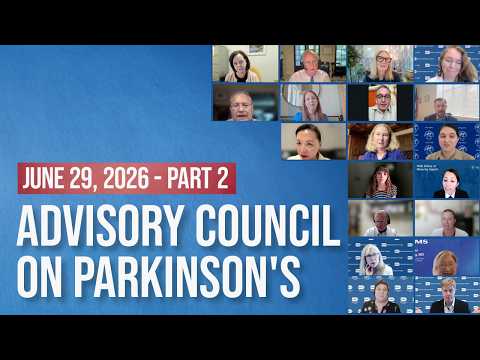
Federal agencies describe services, data gaps and coverage limits for people with Parkinson’s
Summary
Representatives from ACL, IHS, OMH, the VA and CMS briefed the National Parkinson’s Advisory Council on programs, workforce and data challenges, stressing telehealth, caregiver supports and the limits of Medicare coverage without new statutory authority.
Federal agency representatives told the National Parkinson’s Advisory Council that substantial federal programs exist to support people living with Parkinson’s disease, but gaps in workforce, data and coverage complicate access to care.
Rick Nichols of the Administration for Community Living said ACL’s mission is “to maximize the independence, well‑being, and health of older adults, people with disabilities, and their families and caregivers,” and outlined programs that reach millions. He told the council ACL administers more than 40 programs and has a statutory budget of about $2.7 billion, noting that nearly seven in 10 people who reach age 65 will need long‑term services and supports and that “nearly 40 percent of people living with Parkinson’s rely on unpaid informal caregiving.” Nichols pointed council members to ACL tools such as the elder care locator and the disability information and access hub for local referrals.
Maria Bellantoni, chief clinical consultant for geriatrics and palliative care at the Indian Health Service, described IHS’s direct‑care network that serves about 3 million American Indian and Alaska Native people through roughly 600 hospitals, clinics and stations. She said IHS funds 19 sites for dementia models of care using culturally relevant programming, leverages long‑standing telemedicine in remote areas and uses community health aides and other non‑physician providers to extend specialty care into primary‑care settings.
An Office of Minority Health representative highlighted resources to address health disparities, including OMH’s resource and knowledge centers and the Think Cultural Health e‑learning programs, which OMH says have reached about 1.3 million learners since 2004.
A VA neurology leader described the department’s Parkinson’s network, including Parkinson’s disease research and education centers (PADRECs), a hub‑and‑spoke expansion begun in the 2000s, 16 regional movement‑disorder centers and telehealth coverage reaching dozens of VA sites and U.S. territories. The VA presenter said roughly 110,000 veterans nationwide are affected and described multidisciplinary clinics that provide surgery, deep brain stimulation, rehabilitation, mental‑health care and caregiver programs.
Council members pressed Centers for Medicare & Medicaid Services officials on whether Medicare could cover nontraditional therapies such as exercise programs. A CMS official said the agency can test new care and payment models through the Innovation Center but that permanent Medicare coverage typically requires a clear benefit category or congressional action. “The treatment, service or test should be meaningfully used in the care and keeping of the individuals that…will translate into better health outcomes,” the CMS official said, stressing the need to define measurable outcomes before evaluating coverage.
Members and agency staff agreed on recurring themes: telehealth and hub‑and‑spoke models expand access where specialists are scarce; community‑based and non‑physician workforce members are essential to reach underserved areas; and gaps in claims/data coding, and statutory limits on Medicare benefits, complicate rapid adoption and coverage of new services or biomarkers. CMS urged the council to identify specific procedure and diagnosis codes (ICD‑10, CPT or setting‑specific codes) to help officials run claims‑based analyses despite known data lags.
The session concluded with agencies offering to follow up on unanswered technical questions and to work with the council as it develops recommendations. The council will continue its work through upcoming workshops, subcommittees and a request for information that remains open to public comment.