Get Full Government Meeting Transcripts, Videos, & Alerts Forever!
Get email alerts on the Utilities Metering topic
No spam. Unsubscribe anytime.
Petoskey council approves $3.6M Aclara AMI contract to modernize electric and water meters
Summary
Council authorized a $3.6 million contract with Aclara for advanced metering infrastructure to replace aging meters, enable remote reads and provide customer usage portals; the total project cost is estimated at about $4.24 million and staff said utility fund balances can cover the work without an immediate rate increase.
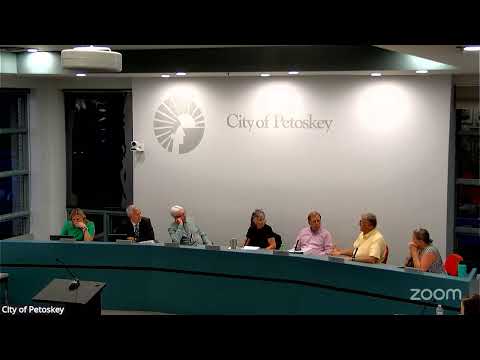
Petoskey City Council voted unanimously on July 6 to authorize city staff to execute a contract with Aclara for advanced metering infrastructure (AMI) to modernize electric and water metering across the city's utility service area.
Staff presented the AMI proposal, describing three core components: replacement of aging electric meters (the city has about 8,500 electric meters, many older than 15 years), modification or replacement of water meters (roughly 4,000 meters), and a radio-frequency communications network using existing tower sites. The presentation emphasized operational benefits: more accurate reads (reducing estimated reads), remote disconnects/reconnects, reduced staff time for manual meter operations, and a customer portal that allows residents to monitor daily or hourly usage.
Costs and funding: The recommended vendor contract with Aclara is approximately $3.6 million; total project costs including engineering, water-meter replacements and contingencies were estimated at about $4.24 million. Staff told council that retained earnings in the electric and water funds provide sufficient liquidity to fund the project now; they proposed rebalancing some CIP items to cover the remainder rather than immediately increasing utility rates. The city indicated a pilot would complete by the end of 2026 with full implementation by the end of 2027.
Privacy and rate implications: Council discussed whether AMI data could be used for time-of-use rate structures. Staff said AMI enables time-of-use rates in the future but any change would require a separate rate-making process and council approval; the present authorization is for infrastructure only. Staff also described safeguards and said customers must opt in to more granular analytics; the system does not "watch" household behavior without customer engagement.
Vote and next steps: Council authorized the Aclara contract 5-0. Staff will execute the pilot, complete funding adjustments in the CIP, and return with project schedule and procurement details for the full rollout.
Why it matters: Updating meters and communications will reduce manual meter-reading costs, improve billing accuracy, create a customer energy-usage portal, and position the city for future utility management options (including potential time-of-use pricing and better integration of distributed energy resources).
Ending: City staff will proceed with the pilot and implementation schedule and report progress to council as the project advances.